Skip to main content
Biochemistry
나의 코스
배우기
시험 준비
AI 튜터
학습 가이드
플래시카드
탐험해 보세요
앱을 사용해 보세요
나의 코스
배우기
시험 준비
AI 튜터
학습 가이드
플래시카드
탐험해 보세요
앱을 사용해 보세요
뒤로
Biochemistry: Cellular Organelles and Amino Acid Structure
카드를 뒤집기 위해 탭할 수 있습니다.
Which organelles are abundant in pancreatic beta cells that produce and secrete insulin?
카드를 뒤집기 위해 탭할 수 있습니다.
👆
Which organelles are abundant in pancreatic beta cells that produce and secrete insulin?
The
Golgi apparatus
and
rough endoplasmic reticulum
are abundant due to their roles in protein synthesis and processing.
진행 상황 추적
컨트롤 버튼이 '내비게이션' 모드로 변경되었습니다.
1/20
추천 영상
VideoThumbView.guidedCourse
02:37
Cytoskeleton
814
views
14
rank
VideoThumbView.guidedCourse
03:02
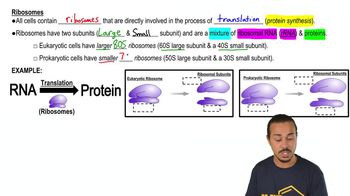
Ribosomes
883
views
18
rank
1
comments
VideoThumbView.guidedCourse
04:04
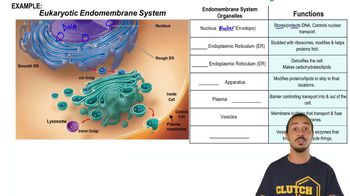
Eukaryotic Endomembrane System
1746
views
24
rank
이 집합의 용어 (20)
하이드의 정의
Which organelles are abundant in pancreatic beta cells that produce and secrete insulin?
The
Golgi apparatus
and
rough endoplasmic reticulum
are abundant due to their roles in protein synthesis and processing.
Why do beta cells have a large amount of rough endoplasmic reticulum?
Because the rough ER contains ribosomes that synthesize the protein hormone
insulin
.
What is the role of the Golgi apparatus in beta cells?
The Golgi apparatus
modifies, sorts, and packages
insulin for secretion.
What is the structure of leucine at pH 12?
At pH 12, leucine exists mainly as its
deprotonated form
with a negatively charged carboxylate group and a neutral amino group.
How does pH affect the ionization state of amino acids like leucine?
At high pH (basic), the amino acid's carboxyl group is
deprotonated
and the amino group is
neutral
.
What functional groups are present in leucine?
Leucine contains an
amino group
, a
carboxyl group
, and a hydrophobic
isobutyl side chain
.
What is the significance of the rough endoplasmic reticulum in protein-secreting cells?
It is the site of
protein synthesis
for secreted and membrane proteins.
What distinguishes the rough ER from the smooth ER?
The rough ER has
ribosomes
on its surface, while the smooth ER does not.
What is the primary function of mitochondria in cells?
Mitochondria generate
ATP
through cellular respiration.
Why are mitochondria not the main organelles for insulin production?
Because insulin is a protein hormone synthesized by ribosomes on the
rough ER
, not produced by mitochondria.
What is the role of lysosomes in cells?
Lysosomes are involved in
degradation
of cellular waste and macromolecules.
Are lysosomes directly involved in insulin synthesis or secretion?
No, lysosomes are not directly involved in insulin synthesis or secretion.
What is the cytoskeleton's role in cells?
The cytoskeleton provides
structural support
and facilitates intracellular transport.
Are peroxisomes involved in insulin production?
No, peroxisomes mainly handle
lipid metabolism
and detoxification.
What happens to the amino group of leucine at pH 12?
The amino group is mostly
neutral (NH2)
due to deprotonation at high pH.
What happens to the carboxyl group of leucine at pH 12?
The carboxyl group is
deprotonated
to form a carboxylate ion (COO-).
What is the charge state of leucine at physiological pH (~7.4)?
Leucine exists as a
zwitterion
with a positively charged amino group and negatively charged carboxyl group.
What is the significance of amino acid ionization states in biochemistry?
Ionization affects
protein structure, enzyme activity,
and
molecular interactions
.
How does the structure of leucine's side chain affect its properties?
The hydrophobic isobutyl side chain makes leucine
nonpolar and hydrophobic
.
What is the general structure of an amino acid?
An amino acid has a central carbon bonded to an
amino group
,
carboxyl group
,
hydrogen
, and a variable
side chain (R group)
.
 뒤로뒤로
뒤로뒤로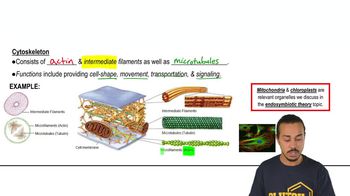
 02:37
02:37