Skip to main content
Biochemistry
나의 코스
배우기
시험 준비
AI 튜터
학습 가이드
플래시카드
탐험해 보세요
앱을 사용해 보세요
나의 코스
배우기
시험 준비
AI 튜터
학습 가이드
플래시카드
탐험해 보세요
앱을 사용해 보세요
뒤로
Biochemistry Fundamentals
카드를 뒤집기 위해 탭할 수 있습니다.
What are the three main subatomic particles of an atom?
카드를 뒤집기 위해 탭할 수 있습니다.
👆
What are the three main subatomic particles of an atom?
Protons
(positive charge),
neutrons
(neutral), and
electrons
(negative charge).
진행 상황 추적
컨트롤 버튼이 '내비게이션' 모드로 변경되었습니다.
1/28
추천 영상
VideoThumbView.guidedCourse
02:55
What Is Biochemistry
5462
views
114
rank
1
comments
VideoThumbView.guidedCourse
1:25
Introduction to Biochemistry Channel
5419
views
110
rank
3
comments
이 집합의 용어 (28)
하이드의 정의
What are the three main subatomic particles of an atom?
Protons
(positive charge),
neutrons
(neutral), and
electrons
(negative charge).
Where is most of an atom's mass located?
In the
nucleus
, which contains protons and neutrons.
What determines the atomic number of an element?
The
number of protons
in the nucleus of an atom.
Define isotopes.
Atoms with the same number of protons but different numbers of neutrons, having identical chemical properties but different mass numbers.
What is atomic weight?
The
average mass
of an element's atoms, accounting for the relative abundance of its isotopes.
What is the significance of the valence shell in an atom?
The
outermost electron shell
that determines an atom's chemical reactivity.
Why are noble gases inert?
They have
full outer electron shells
, making them stable and unreactive.
How do cations and anions form?
Cations form by
losing electrons
(positive charge), anions by
gaining electrons
(negative charge).
What is an ionic bond?
A chemical bond formed by the
electrical attraction
between cations and anions.
What is a covalent bond?
A bond formed by
sharing electrons
between atoms.
Difference between polar and nonpolar covalent bonds?
Polar bonds share electrons
unequally
, creating partial charges; nonpolar bonds share electrons
equally
.
What are the three states of matter relevant to biochemistry?
Solid
(fixed shape and volume),
liquid
(fixed volume, shape varies), and
gas
(no fixed shape or volume).
What role do hydrogen bonds play in water?
Hydrogen bonds
attract water molecules
to each other, affecting water's properties like surface tension and heat capacity.
Define metabolism.
All chemical reactions occurring in the body at any moment.
What is activation energy?
The minimum energy required to
initiate a chemical reaction
.
How do enzymes affect activation energy?
Enzymes
lower activation energy
, allowing reactions to proceed under physiological conditions.
What is the difference between kinetic and potential energy?
Kinetic energy
is energy of motion;
potential energy
is stored energy with the capacity to do work.
What is a mole in chemistry?
A quantity of substance containing
Avogadro's number
of atoms or molecules, with mass in grams equal to atomic or molecular weight.
What is the role of water as a solvent?
Water's polarity allows it to
dissolve many inorganic and organic molecules
, facilitating biochemical reactions.
Define pH and its physiological importance.
pH measures
hydrogen ion concentration
; maintaining normal pH is vital for cellular function and enzyme activity.
What are buffers and their function?
Buffers stabilize pH by
removing or replacing hydrogen ions
, maintaining homeostasis.
What elements primarily compose organic compounds?
Carbon, hydrogen, and usually oxygen.
What are carbohydrates and their main function?
Organic molecules with a 1:2:1 ratio of carbon, hydrogen, and oxygen; primarily serve as
energy sources
.
Difference between saturated and unsaturated fatty acids?
Saturated fatty acids have
no double bonds
and are fully hydrogenated; unsaturated have
one or more double bonds
.
What are proteins made of?
Long chains of
amino acids
linked by peptide bonds.
Describe the four levels of protein structure.
Primary (amino acid sequence), secondary (alpha-helix or beta-sheet), tertiary (3D folding), quaternary (multiple polypeptide subunits).
What is ATP and its role?
Adenosine triphosphate
, the main high-energy compound that stores and transfers energy in cells.
What are nucleic acids and their function?
DNA and RNA; store and transfer genetic information for protein synthesis.
 뒤로뒤로
뒤로뒤로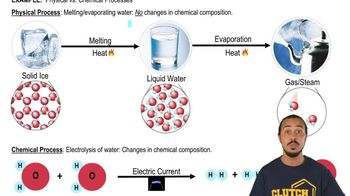
 02:55
02:55
