Skip to main content
Biochemistry
나의 코스
배우기
시험 준비
AI 튜터
학습 가이드
플래시카드
탐험해 보세요
앱을 사용해 보세요
나의 코스
배우기
시험 준비
AI 튜터
학습 가이드
플래시카드
탐험해 보세요
앱을 사용해 보세요
뒤로
Biochemistry Week 1 & 2 Study Notes
카드를 뒤집기 위해 탭할 수 있습니다.
Four key elements in the human body
카드를 뒤집기 위해 탭할 수 있습니다.
👆
Four key elements in the human body
Oxygen, Carbon, Hydrogen, Nitrogen
are the four key elements making up the human body.
진행 상황 추적
컨트롤 버튼이 '내비게이션' 모드로 변경되었습니다.
1/28
추천 영상
VideoThumbView.guidedCourse
03:16
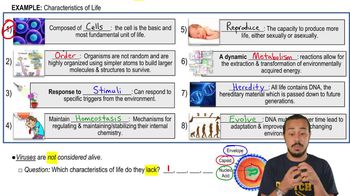
Characteristics of Life
3172
views
88
rank
1
comments
VideoThumbView.guidedCourse
02:52
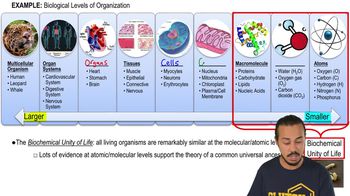
Biological Organization
2088
views
54
rank
VideoThumbView.guidedCourse
03:08
Characteristics of Viruses
2301
views
59
rank
이 집합의 용어 (28)
하이드의 정의
Four key elements in the human body
Oxygen, Carbon, Hydrogen, Nitrogen
are the four key elements making up the human body.
Main inorganic and organic components of the human body
Inorganic:
water and minerals.
Organic:
proteins, lipids, carbohydrates, nucleic acids.
Most abundant inorganic compound in the human body
Water
is the most abundant inorganic compound in the human body.
Intracellular fluid vs extracellular fluid
Intracellular fluid (ICF):
fluid inside cells.
Extracellular fluid (ECF):
fluid outside cells including plasma and interstitial fluid.
Vital properties of water
Water is a
universal solvent
, has high heat capacity, cohesion, adhesion, and participates in chemical reactions.
Definition of solution, solvent, solute, dissolve, dissociate
Solution:
homogeneous mixture.
Solvent:
substance dissolving solutes.
Solute:
substance dissolved.
Dissolve:
solute disperses in solvent.
Dissociate:
solute separates into ions.
Electrolytes vs non-electrolytes
Electrolytes:
substances that dissociate into ions (e.g., Na+, K+).
Non-electrolytes:
do not dissociate (e.g., glucose).
Most abundant electrolytes in intracellular and extracellular fluids
Intracellular:
K+, Mg2+.
Extracellular:
Na+, Cl-.
Definition of pH
pH is the
negative logarithm of hydrogen ion concentration
, indicating acidity or alkalinity.
pH scale relation to acidity and alkalinity
pH < 7 is acidic, pH = 7 is neutral, pH > 7 is alkaline (basic).
Common acids and bases in the human body
Common acids: carbonic acid, lactic acid. Common bases: bicarbonate, ammonia.
Significance of pH in physiological systems
Maintaining pH is critical for enzyme function, metabolic processes, and overall homeostasis.
Body's three chemical buffering systems
Bicarbonate buffer, phosphate buffer, and protein buffer systems.
Optimal plasma pH range
The optimal plasma pH range is
7.35 to 7.45
.
Definition of acid-base imbalance
A disturbance in the normal pH range of body fluids, leading to acidosis or alkalosis.
Acidosis vs alkalosis
Acidosis:
blood pH < 7.35.
Alkalosis:
blood pH > 7.45.
Four major types of acid-base disorders
Respiratory acidosis, respiratory alkalosis, metabolic acidosis, metabolic alkalosis.
Four biomolecules in the human body (most to least abundant)
Water, proteins, lipids, carbohydrates.
Five components of an amino acid
Amino group, carboxyl group, hydrogen atom, central carbon (alpha carbon), and R-side chain.
Essential vs non-essential amino acids
Essential:
must be obtained from diet.
Non-essential:
synthesized by the body.
Phenylketonuria (PKU) causes and consequences
Caused by enzyme defect in phenylalanine hydroxylase; leads to phenylalanine buildup causing brain damage if untreated.
Zwitterion form of amino acids
Amino acids exist as zwitterions at physiological pH, with both positive (NH3+) and negative (COO-) charges.
Isoelectric point (pI) of an amino acid
pH at which the amino acid has no net charge.
Peptide bond formation
A peptide bond forms by a condensation reaction between the amino group of one amino acid and the carboxyl group of another.
Four levels of protein structure
Primary (sequence), secondary (alpha helix, beta sheet), tertiary (3D folding), quaternary (multiple subunits).
Difference between protein denaturation and hydrolysis
Denaturation disrupts structure without breaking peptide bonds; hydrolysis breaks peptide bonds into amino acids.
Six major functions of proteins
Catalysis, defense, structure, regulation, transport, signaling.
Importance of protein structure-function relationship
Protein function depends on its 3D structure; changes can alter or abolish function.
 뒤로뒤로
뒤로뒤로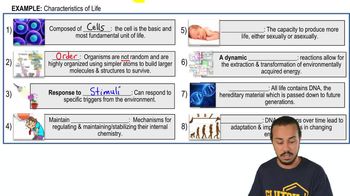
 03:16
03:16