Skip to main content
General Biology
나의 코스
배우기
시험 준비
AI 튜터
학습 가이드
교과서적 해결책
플래시카드
탐험해 보세요
앱을 사용해 보세요
나의 코스
배우기
시험 준비
AI 튜터
학습 가이드
교과서적 해결책
플래시카드
탐험해 보세요
앱을 사용해 보세요
뒤로
Biogeography definitions
카드를 뒤집기 위해 탭할 수 있습니다.
Biogeography
카드를 뒤집기 위해 탭할 수 있습니다.
👆
Biogeography
Study of how and why organisms are distributed across geographic regions and through time, integrating ecological and evolutionary perspectives.
진행 상황 추적
컨트롤 버튼이 '내비게이션' 모드로 변경되었습니다.
1/14
관련 플래시카드
관련 실천
추천 영상
Biogeography exam
Biogeography
27 용어
Biogeography quiz #1
Biogeography
11 용어
Biogeography
48. Ecology
5 문제점
주제
Earth's Climate Patterns
48. Ecology
5 문제점
주제
48. Ecology - Part 1 of 3
4 주제
12 문제점
장
Jason
48. Ecology - Part 2 of 3
4 주제
9 문제점
장
48. Ecology - Part 3 of 3
2 주제
5 문제점
장
03:26
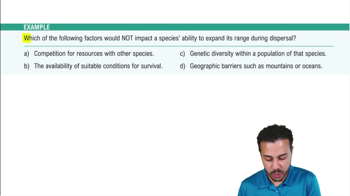
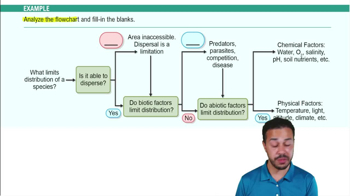
Biogeography Example 2
2537
views
9
rank
01:12
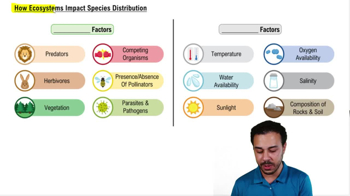
How Ecosystems Impact Species Distribution
2423
views
15
rank
02:43
Biogeography Example 1
2691
views
17
rank
이 집합의 용어 (14)
하이드의 정의
Biogeography
Study of how and why organisms are distributed across geographic regions and through time, integrating ecological and evolutionary perspectives.
Dispersal
Movement of individuals or gametes from their birthplace to new locations, enabling population establishment in different areas.
Endemic Species
Organisms naturally restricted to a single geographic area, often due to limited ability to move or colonize new regions.
Ecosystem
Community of living organisms interacting with nonliving components, influencing species distribution and abundance.
Biotic Factors
Living elements such as predators, vegetation, and competitors that affect where and how species exist within an environment.
Abiotic Factors
Nonliving environmental components like temperature, water, and soil composition that shape the presence and success of organisms.
Net Primary Productivity
Estimate of organic matter available as food in a region, reflecting an ecosystem's capacity to support life.
Amazon Rainforest
Region with exceptionally high net primary productivity, supporting vast biodiversity due to abundant organic resources.
Sahara Desert
Area characterized by low net primary productivity, resulting in limited food resources and sparse life forms.
Predators
Organisms that consume other living beings, influencing population sizes and distribution within ecosystems.
Herbivores
Animals that feed on plants, impacting vegetation patterns and the structure of biological communities.
Pollinators
Agents, often animals or wind, that transfer pollen, facilitating plant reproduction and affecting plant distribution.
Parasites
Organisms that live on or in a host, deriving nutrients at the host's expense and influencing host populations.
Pathogens
Microorganisms or agents causing disease, affecting the health and distribution of host species in ecosystems.
 뒤로뒤로
뒤로뒤로
 03:26
03:26