Skip to main content
General Biology
나의 코스
배우기
시험 준비
AI 튜터
학습 가이드
교과서적 해결책
플래시카드
탐험해 보세요
앱을 사용해 보세요
나의 코스
배우기
시험 준비
AI 튜터
학습 가이드
교과서적 해결책
플래시카드
탐험해 보세요
앱을 사용해 보세요
뒤로
Circulatory and Respiratory Anatomy exam
1 학생이 이 점이 도움이 되었다고 느꼈습니다
카드를 뒤집기 위해 탭할 수 있습니다.
Gas Exchange
카드를 뒤집기 위해 탭할 수 있습니다.
👆
Gas Exchange
The process where oxygen diffuses into the bloodstream and carbon dioxide diffuses out into the lungs.
진행 상황 추적
컨트롤 버튼이 '내비게이션' 모드로 변경되었습니다.
1/29
관련 플래시카드
관련 실천
추천 영상
Circulatory and Respiratory Anatomy quiz #1
Circulatory and Respiratory Anatomy
26 용어
Circulatory and Respiratory Anatomy definitions
Circulatory and Respiratory Anatomy
10 용어
Circulatory and Respiratory Anatomy quiz #1
Circulatory and Respiratory Anatomy
34 용어
Circulatory and Respiratory Anatomy
40. Circulatory System
7 문제점
주제
Jason
Heart Physiology
40. Circulatory System
7 문제점
주제
Jason
40. Circulatory System
3 주제
9 문제점
장
Jason
02:15
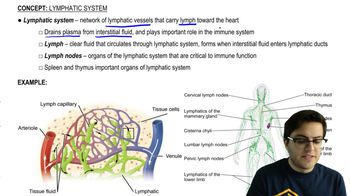
Lymphatic System
3212
views
14
rank
06:24
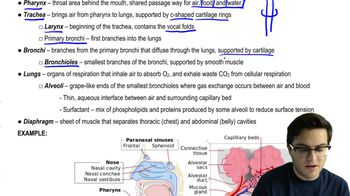
Lung Anatomy
2963
views
11
rank
06:28
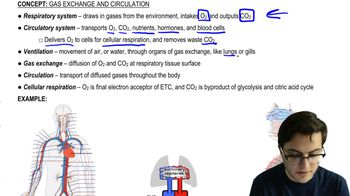
Gas Exchange and Circulation
4912
views
60
rank
이 집합의 용어 (29)
하이드의 정의
Gas Exchange
The process where oxygen diffuses into the bloodstream and carbon dioxide diffuses out into the lungs.
What is the primary function of the respiratory system?
To bring in oxygen and expel carbon dioxide.
Arteries
Blood vessels that carry blood away from the heart.
What is the role of veins in the circulatory system?
To transport blood back to the heart.
Alveoli
Tiny sacs in the lungs where gas exchange occurs.
What is the function of the diaphragm?
To contract and create negative pressure, pulling air into the lungs.
Pulmonary Circulation
The loop of circulation that carries deoxygenated blood from the heart to the lungs and returns oxygenated blood back to the heart.
What is systemic circulation?
The loop of circulation that delivers oxygenated blood to the body and returns deoxygenated blood to the heart.
Capillaries
Small blood vessels where gas and nutrient exchange occurs between blood and tissues.
What are the main components of blood?
Plasma, white blood cells, and red blood cells.
Hemoglobin
A protein in red blood cells that carries oxygen.
What is the function of white blood cells?
To help fight and identify infections.
Pharynx
The shared passageway for food, air, and water at the back of the mouth.
What is the trachea?
The windpipe that brings air from the pharynx to the lungs.
Bronchi
The two main branches of the trachea that lead into the lungs.
What are bronchioles?
The smallest branches of the bronchi, supported by smooth muscle.
Surfactant
A substance that reduces surface tension in the alveoli, preventing them from collapsing.
What is the role of the lymphatic system?
To drain excess plasma from interstitial fluid and return it to the bloodstream.
Atria
The chambers of the heart that receive blood from veins.
What are ventricles?
The chambers of the heart that receive blood from atria and pump it into arteries.
Atrioventricular Valves
Valves that prevent backflow from the ventricles to the atria.
What is the function of semilunar valves?
To prevent backflow from the ventricles to the arteries.
Pulmonary Artery
The artery that carries deoxygenated blood from the heart to the lungs.
What is the aorta?
The main artery that delivers oxygenated blood from the heart to the body.
Vena Cava
The large veins that return deoxygenated blood from the body to the heart.
What is erythropoietin?
A hormone secreted by the kidney that stimulates red blood cell production.
Sickle Cell Disease
A disease caused by abnormal hemoglobin that results in distorted red blood cells.
What is the role of platelets?
To play an important role in blood clotting.
Endothelium
The special type of epithelial tissue that lines the interior surface of blood vessels.
 뒤로뒤로
뒤로뒤로
 02:15
02:15