Skip to main content
General Biology
나의 코스
배우기
시험 준비
AI 튜터
학습 가이드
교과서적 해결책
플래시카드
탐험해 보세요
앱을 사용해 보세요
나의 코스
배우기
시험 준비
AI 튜터
학습 가이드
교과서적 해결책
플래시카드
탐험해 보세요
앱을 사용해 보세요
뒤로
Community Interactions: Exploitation (+/-) definitions
카드를 뒤집기 위해 탭할 수 있습니다.
Exploitation
카드를 뒤집기 위해 탭할 수 있습니다.
👆
Exploitation
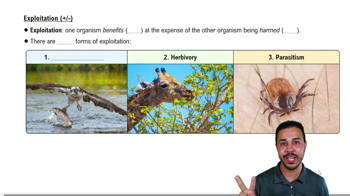
A community interaction where one organism benefits while another is harmed, encompassing predation, herbivory, and parasitism.
진행 상황 추적
컨트롤 버튼이 '내비게이션' 모드로 변경되었습니다.
1/15
관련 플래시카드
관련 실천
추천 영상
Community Interactions: Exploitation (+/-) exam
Community Interactions: Exploitation (+/-)
29 용어
Community Interactions: Exploitation (+/-) quiz #2
Community Interactions: Exploitation (+/-)
13 용어
Community Interactions: Exploitation (+/-) quiz #3
Community Interactions: Exploitation (+/-)
10 용어
Community Interactions: Exploitation (+/-)
51. Community Ecology
3 문제점
주제
Community Interactions: Mutualism (+/+) & Commensalism (+/0)
51. Community Ecology
4 문제점
주제
51. Community Ecology - Part 1 of 2
4 주제
12 문제점
장
Jason
51. Community Ecology - Part 2 of 2
4 주제
10 문제점
장
01:42
1) Exploitation (+/-): Predation
1231
views
8
rank
02:37
3) Exploitation (+/-): Parasitism
1184
views
6
rank
00:49
Community Interactions: Exploitation (+/–)
1202
views
6
rank
이 집합의 용어 (15)
하이드의 정의
Exploitation
A community interaction where one organism benefits while another is harmed, encompassing predation, herbivory, and parasitism.
Predation
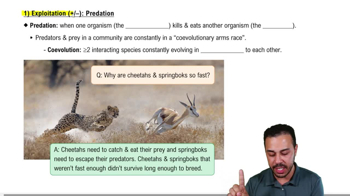
An interaction where a predator kills and consumes prey, driving reciprocal adaptations in both predator and prey.
Herbivory
A relationship where an organism consumes plants, algae, or photosynthetic bacteria, often leading to plant defenses.
Parasitism
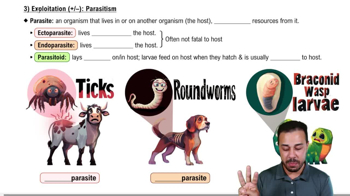
A relationship where one organism lives on or in another, extracting resources and often harming but not immediately killing the host.
Coevolution
A process where interacting species reciprocally influence each other's adaptations over time.
Ectoparasite
A parasite that resides on the external surface of its host, such as ticks on mammals.
Endoparasite
A parasite that inhabits the internal tissues or organs of its host, like roundworms in digestive tracts.
Parasitoid
An organism whose larvae develop inside or on a host, ultimately killing the host as part of their life cycle.
Aposematic Coloration
A warning display using bright colors to signal unpalatability or danger to potential predators.
Mimicry
An adaptation where one species resembles another organism or object to gain a survival advantage.
Batesian Mimicry
A harmless species imitates a harmful one to deter predators, benefiting only the mimic.
Mullerian Mimicry
Two or more harmful species share similar warning signals, reinforcing predator avoidance for all involved.
Mechanical Defense
A physical adaptation, such as thorns or shells, that protects an organism from being eaten.
Chemical Defense
A strategy where organisms produce toxins or deterrent substances to reduce the risk of being consumed.
Cryptic Coloration
A camouflage adaptation allowing organisms to blend into their environment and avoid detection by predators.
 뒤로뒤로
뒤로뒤로
 01:42
01:42