Skip to main content
General Biology
나의 코스
배우기
시험 준비
AI 튜터
학습 가이드
교과서적 해결책
플래시카드
탐험해 보세요
앱을 사용해 보세요
나의 코스
배우기
시험 준비
AI 튜터
학습 가이드
교과서적 해결책
플래시카드
탐험해 보세요
앱을 사용해 보세요
뒤로
Endosymbiotic Theory quiz #4
카드를 뒤집기 위해 탭할 수 있습니다.
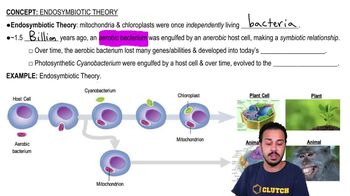
According to the Endosymbiotic Theory, which type of bacterium is believed to have evolved into mitochondria?
카드를 뒤집기 위해 탭할 수 있습니다.
👆
According to the Endosymbiotic Theory, which type of bacterium is believed to have evolved into mitochondria?
An aerobic bacterium is believed to have evolved into mitochondria.
진행 상황 추적
컨트롤 버튼이 '내비게이션' 모드로 변경되었습니다.
1/10
관련 플래시카드
관련 실천
추천 영상
Endosymbiotic Theory definitions
Endosymbiotic Theory
13 용어
Endosymbiotic Theory quiz #1
Endosymbiotic Theory
21 용어
Endosymbiotic Theory exam
Endosymbiotic Theory
29 용어
Endosymbiotic Theory
5. Cell Components
3 문제점
주제
Brendan
Introduction to the Cytoskeleton
5. Cell Components
5 문제점
주제
Jason
5. Cell Components
9 주제
15 문제점
장
Brendan
06:58
Endosymbiotic Theory
15859
views
144
rank
1
comments
이 집합의 용어 (10)
하이드의 정의
According to the Endosymbiotic Theory, which type of bacterium is believed to have evolved into mitochondria?
An aerobic bacterium is believed to have evolved into mitochondria.
Approximately how many years ago did the endosymbiotic events leading to mitochondria and chloroplasts occur?
These events occurred about 1.5 billion years ago.
What evidence supports the bacterial origin of mitochondria and chloroplasts?
Evidence includes similarities in DNA structure (small, circular DNA), ribosome type (70s ribosomes), and replication by binary fission.
What type of ribosomes are found in mitochondria and chloroplasts, and what does this indicate?
Mitochondria and chloroplasts contain 70s ribosomes, indicating a prokaryotic origin.
What happened to many of the genes of the engulfed bacteria over time?
Many genes were lost or transferred to the host cell's nucleus, leading to the evolution of the bacteria into organelles.
What is the significance of the endosymbiotic origin of mitochondria for the evolution of complex life?
The acquisition of mitochondria enabled cells to efficiently use oxygen, allowing for the evolution of complex multicellular organisms.
What is the main difference between the DNA found in mitochondria/chloroplasts and the DNA in the eukaryotic nucleus?
Mitochondria and chloroplasts have small, circular DNA, while the eukaryotic nucleus contains linear DNA.
According to the Endosymbiotic Theory, which type of bacterium is believed to have evolved into mitochondria?
An aerobic bacterium is believed to have evolved into mitochondria.
What evidence supports the bacterial origin of mitochondria and chloroplasts?
Evidence includes similarities in DNA structure (small, circular DNA), ribosome type (70s ribosomes), and replication by binary fission.
What happened to many of the genes of the engulfed bacteria over time?
Many genes were lost or transferred to the host cell's nucleus, leading to the evolution of the bacteria into organelles.
 뒤로뒤로
뒤로뒤로

 06:58
06:58