Skip to main content
General Biology
나의 코스
배우기
시험 준비
AI 튜터
학습 가이드
교과서적 해결책
플래시카드
탐험해 보세요
앱을 사용해 보세요
나의 코스
배우기
시험 준비
AI 튜터
학습 가이드
교과서적 해결책
플래시카드
탐험해 보세요
앱을 사용해 보세요
뒤로
Introduction to Cell Division quiz #7
카드를 뒤집기 위해 탭할 수 있습니다.
What is the main function of the process of meiosis in animals?
카드를 뒤집기 위해 탭할 수 있습니다.
👆
What is the main function of the process of meiosis in animals?
Meiosis produces haploid gametes (sperm and eggs) for sexual reproduction.
진행 상황 추적
컨트롤 버튼이 '내비게이션' 모드로 변경되었습니다.
1/34
관련 플래시카드
관련 실천
추천 영상
Introduction to Cell Division definitions
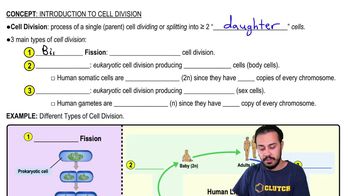
Introduction to Cell Division
11 용어
Introduction to Cell Division quiz #1
Introduction to Cell Division
48 용어
Introduction to Cell Division exam
Introduction to Cell Division
27 용어
Introduction to Cell Division
11. Cell Division
4 문제점
주제
Jason
Organization of DNA in the Cell
11. Cell Division
4 문제점
주제
Jason
11. Cell Division - Part 1 of 2
5 주제
9 문제점
장
Jason
11. Cell Division - Part 2 of 2
4 주제
9 문제점
장
Jason
04:45
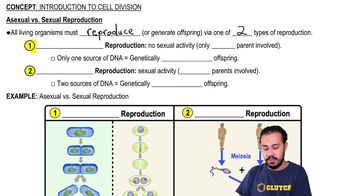
Asexual vs. Sexual Reproduction
16937
views
362
rank
3
comments
09:40
Introduction to Cell Division
25843
views
581
rank
1
comments
03:19
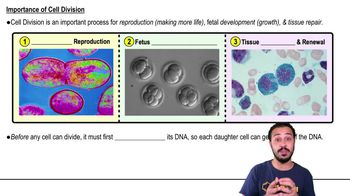
Importance of Cell Division
16142
views
519
rank
이 집합의 용어 (34)
하이드의 정의
What is the main function of the process of meiosis in animals?
Meiosis produces haploid gametes (sperm and eggs) for sexual reproduction.
How does the process of cell division ensure the maintenance of chromosome number in a species?
Mitosis maintains chromosome number in somatic cells, while meiosis and fertilization maintain it across generations.
What is the role of cell division in the repair of damaged tissues?
Cell division produces new cells to replace those lost or damaged, aiding tissue repair.
How does the process of binary fission differ from mitosis in terms of cellular structures involved?
Binary fission does not involve a nucleus, while mitosis involves the division of the nucleus.
What is the main outcome of the process of mitosis in terms of cell number and genetic content?
Mitosis produces two genetically identical diploid daughter cells.
What is the main outcome of the process of meiosis in terms of cell number and genetic content?
Meiosis produces four genetically unique haploid gametes.
How does the process of cell division contribute to the formation of new individuals in a population?
Cell division enables reproduction, producing new individuals and increasing population size.
Why is it important for cell division to be tightly regulated in multicellular organisms?
Tight regulation prevents uncontrolled cell growth, which can lead to cancer and other disorders.
How does the process of mitosis contribute to the maintenance of tissue homeostasis?
Mitosis replaces lost or damaged cells, maintaining tissue structure and function.
What is the main difference in the role of mitosis and meiosis in the life cycle of an organism?
Mitosis is for growth and repair, while meiosis is for producing gametes for reproduction.
How does the process of cell division relate to the concept of heredity?
Cell division ensures the transmission of genetic information from parent to offspring.
What is the main function of the process of binary fission in unicellular organisms?
Binary fission allows unicellular organisms to reproduce and maintain their populations.
How does the process of meiosis ensure the production of genetically unique gametes?
Meiosis introduces genetic variation through crossing over and independent assortment.
Why is it important for each daughter cell to receive an exact copy of the parent cell's DNA during mitosis?
An exact copy ensures proper cell function and genetic stability.
How does the process of cell division contribute to the adaptation and evolution of species?
Cell division, especially through meiosis and sexual reproduction, generates genetic diversity, driving adaptation and evolution.
What is the main difference in the outcome of cell division between prokaryotes and eukaryotes?
Prokaryotes produce identical cells by binary fission; eukaryotes use mitosis for identical somatic cells and meiosis for diverse gametes.
How does the process of mitosis contribute to the replacement of cells lost during normal wear and tear?
Mitosis produces new cells to replace those lost, maintaining tissue health.
What is the main function of the process of meiosis in plants and animals?
Meiosis produces haploid gametes for sexual reproduction in both plants and animals.
How does the process of cell division ensure the continuity of life from one generation to the next?
Cell division produces new cells and gametes, enabling reproduction and the transmission of genetic information.
Why is it important for the chromosome number to be maintained in sexually reproducing organisms?
Maintaining chromosome number ensures genetic stability and proper development in offspring.
How does the process of mitosis differ from meiosis in terms of genetic variation?
Mitosis produces genetically identical cells, while meiosis produces genetically varied gametes.
What is the main role of cell division in the growth of multicellular organisms?
Cell division increases the number of cells, enabling growth and development.
How does the process of binary fission contribute to the rapid growth of bacterial populations?
Binary fission allows bacteria to reproduce quickly, leading to rapid population growth.
What is the main difference in the genetic content of cells produced by mitosis and meiosis?
Mitosis produces genetically identical diploid cells; meiosis produces genetically unique haploid cells.
How does the process of cell division relate to the concept of cellular differentiation?
Cell division produces new cells that can differentiate into specialized cell types.
Why is it important for cell division to occur in a controlled manner?
Controlled cell division prevents abnormal growth and maintains tissue health.
How does the process of mitosis contribute to the regeneration of tissues?
Mitosis produces new cells that replace those lost, enabling tissue regeneration.
What is the main function of the process of meiosis in the formation of new individuals?
Meiosis produces gametes that combine during fertilization to form new individuals.
How does the process of cell division ensure the proper distribution of genetic material to daughter cells?
Cell division duplicates and evenly distributes chromosomes to ensure each daughter cell receives a full set.
What is the main difference in the number of chromosomes between somatic cells and gametes?
Somatic cells are diploid with two sets of chromosomes; gametes are haploid with one set.
How does the process of mitosis contribute to the maintenance of genetic stability in organisms?
Mitosis ensures each daughter cell receives an exact copy of the parent cell's DNA, maintaining genetic stability.
What is the main outcome of the process of binary fission in terms of cell number and genetic content?
Binary fission produces two genetically identical daughter cells.
How does the process of meiosis contribute to the maintenance of chromosome number across generations?
Meiosis halves the chromosome number in gametes, so fertilization restores the diploid number in offspring.
Why is cell division necessary for the survival and reproduction of all living organisms?
Cell division enables growth, repair, and reproduction, which are essential for survival and continuation of species.
 뒤로뒤로
뒤로뒤로
 04:45
04:45