Skip to main content
General Biology
나의 코스
배우기
시험 준비
AI 튜터
학습 가이드
교과서적 해결책
플래시카드
탐험해 보세요
앱을 사용해 보세요
나의 코스
배우기
시험 준비
AI 튜터
학습 가이드
교과서적 해결책
플래시카드
탐험해 보세요
앱을 사용해 보세요
뒤로
Introduction to Energy quiz #3
카드를 뒤집기 위해 탭할 수 있습니다.
What are the two main forms of energy discussed in biology?
카드를 뒤집기 위해 탭할 수 있습니다.
👆
What are the two main forms of energy discussed in biology?
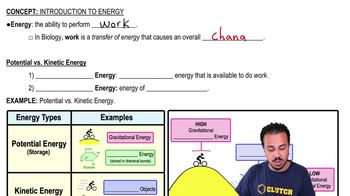
The two main forms of energy are potential energy (stored energy) and kinetic energy (energy of motion).
진행 상황 추적
컨트롤 버튼이 '내비게이션' 모드로 변경되었습니다.
1/11
관련 플래시카드
관련 실천
추천 영상
Introduction to Energy definitions
Introduction to Energy
6 용어
Introduction to Energy quiz #1
Introduction to Energy
23 용어
Introduction to Energy exam
Introduction to Energy
29 용어
Introduction to Energy
7. Energy and Metabolism
4 문제점
주제
Jason
Laws of Thermodynamics
7. Energy and Metabolism
4 문제점
주제
Jason
7. Energy and Metabolism
10 주제
13 문제점
장
Brendan
04:21
Thermodynamics: System vs. Surroundings
20641
views
322
rank
04:58
Introduction to Energy
27820
views
550
rank
2
comments
이 집합의 용어 (11)
하이드의 정의
What are the two main forms of energy discussed in biology?
The two main forms of energy are potential energy (stored energy) and kinetic energy (energy of motion).
What is kinetic energy and provide a biological example?
Kinetic energy is the energy of motion, such as muscle contractions during movement.
What is chemical potential energy and where is it commonly found in biology?
Chemical potential energy is energy stored in chemical bonds, commonly found in molecules like glucose.
What is the system in the context of thermodynamics?
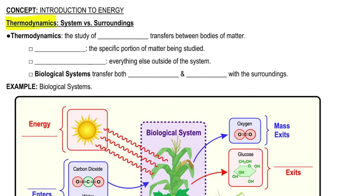
The system is the specific portion of matter being studied, such as a plant or a particular chemical reaction.
How do biological systems interact with their surroundings in terms of energy and mass?
Biological systems can exchange both energy and mass with their surroundings.
What is the role of glucose in biological energy storage?
Glucose stores chemical potential energy in its bonds, which can be used by organisms for work.
How does photosynthesis illustrate the concept of energy and mass transfer in biological systems?
Photosynthesis shows energy (sunlight) and mass (CO2, water) entering a plant, and new forms of energy (glucose) and mass (oxygen) exiting.
What is the significance of distinguishing between the system and the surroundings in thermodynamics?
Distinguishing between the system and surroundings helps clarify where energy and mass transfers occur.
What is an example of kinetic energy in the human body?
An example is the contraction of muscles when moving or exercising.
What is the main takeaway about energy and mass transfer in biological systems?
Biological systems can exchange both energy and mass with their surroundings, often transforming them in the process.
What is the relationship between energy and work in biological systems?
Energy is required to perform work, which involves causing changes or movement within biological systems.
 뒤로뒤로
뒤로뒤로

 04:21
04:21