Skip to main content
General Biology
나의 코스
배우기
시험 준비
AI 튜터
학습 가이드
교과서적 해결책
플래시카드
탐험해 보세요
앱을 사용해 보세요
나의 코스
배우기
시험 준비
AI 튜터
학습 가이드
교과서적 해결책
플래시카드
탐험해 보세요
앱을 사용해 보세요
뒤로
Introduction to Metabolism quiz #4
카드를 뒤집기 위해 탭할 수 있습니다.
How do metabolic pathways relate to growth and repair in organisms?
카드를 뒤집기 위해 탭할 수 있습니다.
👆
How do metabolic pathways relate to growth and repair in organisms?
Anabolic pathways synthesize the macromolecules needed for growth and repair.
진행 상황 추적
컨트롤 버튼이 '내비게이션' 모드로 변경되었습니다.
1/26
관련 플래시카드
관련 실천
추천 영상
Introduction to Metabolism definitions
Introduction to Metabolism
6 용어
Introduction to Metabolism quiz #1
Introduction to Metabolism
17 용어
Introduction to Metabolism exam
Introduction to Metabolism
28 용어
Introduction to Metabolism
7. Energy and Metabolism
4 문제점
주제
Jason
Negative & Positive Feedback
7. Energy and Metabolism
4 문제점
주제
KeyshawnDavis
7. Energy and Metabolism
10 주제
13 문제점
장
Brendan
02:17
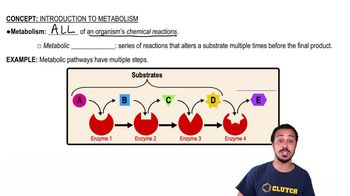
Introduction to Metabolism
19501
views
345
rank
03:25
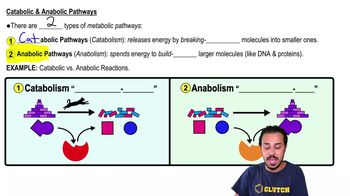
Catabolic & Anabolic Pathways
18001
views
300
rank
1
comments
이 집합의 용어 (26)
하이드의 정의
How do metabolic pathways relate to growth and repair in organisms?
Anabolic pathways synthesize the macromolecules needed for growth and repair.
What is the role of small molecules in metabolism?
Small molecules serve as substrates, intermediates, or products in metabolic pathways.
How does metabolism relate to nutrition?
Nutrients provide the substrates for metabolic pathways, supporting energy production and biosynthesis.
What is the difference between a substrate and a product in a metabolic pathway?
A substrate is the starting molecule for a reaction, while a product is the molecule formed after the reaction.
How do cells use the energy released from catabolic pathways?
Cells use this energy to power cellular processes, including anabolic reactions.
Why are metabolic pathways essential for life?
They enable organisms to obtain energy, synthesize necessary compounds, and maintain cellular functions.
What is the relationship between metabolism and enzymes?
Enzymes catalyze the chemical reactions that make up metabolism, ensuring efficiency and regulation.
How do anabolic pathways contribute to the formation of macromolecules?
Anabolic pathways assemble small molecules into macromolecules like proteins, nucleic acids, and polysaccharides.
What is the main function of catabolic pathways in cells?
Catabolic pathways break down complex molecules to release energy and provide building blocks.
How do metabolic pathways ensure specificity in chemical reactions?
Each step is catalyzed by a specific enzyme that acts only on particular substrates.
What is the importance of energy coupling in metabolism?
Energy coupling links exergonic and endergonic reactions, allowing energy released from catabolism to drive anabolism.
How do metabolic pathways adapt to changes in cellular conditions?
Pathways are regulated by enzyme activity, substrate availability, and feedback mechanisms.
What is the role of metabolic pathways in cellular respiration?
Metabolic pathways in cellular respiration break down glucose to release energy for cellular use.
How do anabolic and catabolic pathways differ in their direction of molecular transformation?
Catabolic pathways break down molecules, while anabolic pathways build up molecules.
What is the significance of sequential enzyme action in metabolic pathways?
Sequential enzyme action ensures orderly transformation of substrates to the final product.
How does the concept of metabolism apply to all living organisms?
All living organisms rely on metabolism to obtain energy and synthesize necessary compounds for survival.
What is the relationship between metabolism and disease?
Disruptions in metabolic pathways can lead to diseases due to imbalances in energy production or biosynthesis.
How do cells coordinate multiple metabolic pathways simultaneously?
Cells coordinate pathways through regulation of enzyme activity and compartmentalization of reactions.
What is the function of metabolic regulation?
Metabolic regulation ensures that pathways operate efficiently and respond to cellular needs.
How do metabolic pathways contribute to adaptation in different environments?
Organisms can adjust their metabolic pathways to utilize available resources and survive in various environments.
What is the importance of metabolic intermediates in biosynthesis?
Metabolic intermediates serve as precursors for the synthesis of essential biomolecules.
How does metabolism relate to energy flow in ecosystems?
Metabolism drives the transformation of energy and matter, supporting the flow of energy through ecosystems.
What is the role of cofactors in metabolic pathways?
Cofactors assist enzymes in catalyzing metabolic reactions.
How do metabolic pathways contribute to the maintenance of cellular energy balance?
They regulate the production and consumption of energy to meet cellular demands.
What is the relationship between metabolism and evolution?
Metabolic adaptations have evolved to allow organisms to exploit different energy sources and environments.
How do metabolic pathways support cellular communication?
Metabolic products can act as signals to regulate cellular activities and coordinate responses.
 뒤로뒤로
뒤로뒤로


 02:17
02:17