 뒤로
뒤로Ionic Bonding definitions


 04:34
04:34
이 집합의 용어 (9)
Charge
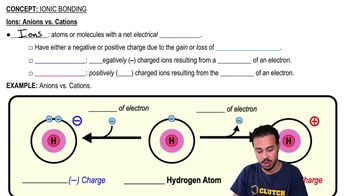
The net electrical property of an atom or molecule, determined by the difference between the number of protons (positive) and electrons (negative).
Positive
A state where an atom has more protons than electrons, resulting in a net positive charge.
Negative
An atom or molecule with more electrons than protons, resulting in a net negative charge.
Anion
A negatively charged ion formed when an atom gains one or more electrons, resulting in more electrons than protons.
Cation
A positively charged ion formed when an atom loses one or more electrons, resulting in more protons than electrons.
Ion
An atom or molecule with a net electric charge due to the loss or gain of one or more electrons.
First Shell
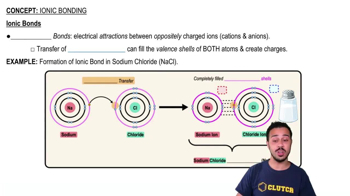
The innermost electron shell of an atom, which can hold a maximum of 2 electrons, determining the atom's initial electron configuration and stability.
Second Shell
The second electron shell can hold up to 8 electrons and is the next energy level after the first shell, playing a crucial role in an atom's chemical reactivity and bonding.
Valence Electrons
Electrons in the outermost shell of an atom that determine its chemical reactivity and bonding behavior.