Skip to main content
General Biology
나의 코스
배우기
시험 준비
AI 튜터
학습 가이드
교과서적 해결책
플래시카드
탐험해 보세요
앱을 사용해 보세요
나의 코스
배우기
시험 준비
AI 튜터
학습 가이드
교과서적 해결책
플래시카드
탐험해 보세요
앱을 사용해 보세요
뒤로
Passive vs. Active Transport quiz #4
카드를 뒤집기 위해 탭할 수 있습니다.
How do antiporters contribute to ion balance in cells?
카드를 뒤집기 위해 탭할 수 있습니다.
👆
How do antiporters contribute to ion balance in cells?
Antiporters exchange ions across the membrane in opposite directions, helping maintain proper ion concentrations inside and outside the cell.
진행 상황 추적
컨트롤 버튼이 '내비게이션' 모드로 변경되었습니다.
1/10
관련 플래시카드
관련 실천
추천 영상
Passive vs. Active Transport quiz #1
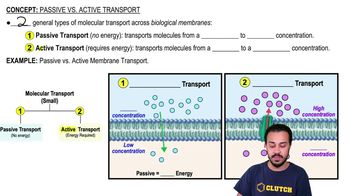
Passive vs. Active Transport
28 용어
Passive vs. Active Transport definitions
Passive vs. Active Transport
14 용어
Passive vs. Active Transport exam
Passive vs. Active Transport
26 용어
Passive vs. Active Transport
6. The Membrane
3 문제점
주제
KeyshawnDavis
Osmosis
6. The Membrane
6 문제점
주제
Jason
6. The Membrane
9 주제
13 문제점
장
Jason
03:28
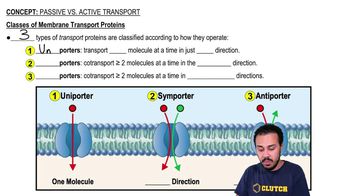
Classes of Membrane Transport Proteins
17624
views
246
rank
3
comments
04:18
Passive vs. Active Transport
21209
views
308
rank
3
comments
이 집합의 용어 (10)
하이드의 정의
How do antiporters contribute to ion balance in cells?
Antiporters exchange ions across the membrane in opposite directions, helping maintain proper ion concentrations inside and outside the cell.
What is the main difference in the direction of molecule movement between passive and active transport?
In passive transport, molecules move down their concentration gradient; in active transport, molecules move against their concentration gradient.
What is the main difference between passive and active transport in terms of energy requirement?
Passive transport does not require energy, while active transport requires an energy input, often from ATP.
In which direction do molecules move during passive transport relative to their concentration gradient?
Molecules move from an area of high concentration to an area of low concentration during passive transport.
Why does active transport require energy input?
Active transport requires energy because it moves molecules against their concentration gradient, from low to high concentration.
What is the function of a uniporter membrane transport protein?
A uniporter transports one molecule at a time in one direction across the membrane.
How do symporters differ from uniporters in their transport mechanism?
Symporters transport two or more molecules at the same time in the same direction, while uniporters transport only one molecule in one direction.
How do antiporters contribute to ion balance in cells?
Antiporters exchange ions across the membrane in opposite directions, helping maintain proper ion concentrations inside and outside the cell.
What is the key distinguishing feature of antiporters compared to symporters?
Antiporters transport two molecules in opposite directions, while symporters transport them in the same direction.
What is the main difference in the direction of molecule movement between passive and active transport?
In passive transport, molecules move down their concentration gradient; in active transport, molecules move against their concentration gradient.
 뒤로뒤로
뒤로뒤로

 03:28
03:28