Skip to main content
General Biology
나의 코스
배우기
시험 준비
AI 튜터
학습 가이드
교과서적 해결책
플래시카드
탐험해 보세요
앱을 사용해 보세요
나의 코스
배우기
시험 준비
AI 튜터
학습 가이드
교과서적 해결책
플래시카드
탐험해 보세요
앱을 사용해 보세요
뒤로
Prokaryotes in the Environment definitions
카드를 뒤집기 위해 탭할 수 있습니다.
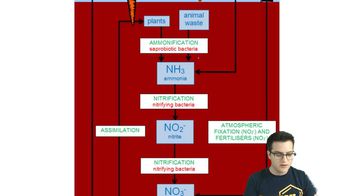
Nitrogen Cycle
카드를 뒤집기 위해 탭할 수 있습니다.
👆
Nitrogen Cycle
A global process where atmospheric N2 is converted into usable nitrogen forms, primarily driven by prokaryotes.
진행 상황 추적
컨트롤 버튼이 '내비게이션' 모드로 변경되었습니다.
1/15
관련 플래시카드
관련 실천
추천 영상
Prokaryotes in the Environment quiz #2
Prokaryotes in the Environment
14 용어
Prokaryotes in the Environment
26. Prokaryotes
5 문제점
주제
Prokaryote Lineages
26. Prokaryotes
6 문제점
주제
Jason
26. Prokaryotes - Part 1 of 2
5 주제
13 문제점
장
Jason
26. Prokaryotes - Part 2 of 2
2 주제
5 문제점
장
05:34
Prokaryote Ecology
3548
views
16
rank
03:25
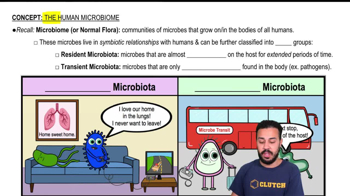
The Human Microbiome
1606
views
8
rank
03:40
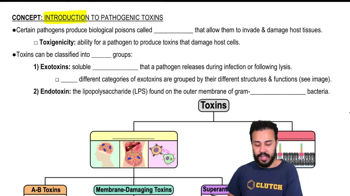
Introduction to Pathogenic Toxins
1735
views
8
rank
이 집합의 용어 (15)
하이드의 정의
Nitrogen Cycle
A global process where atmospheric N2 is converted into usable nitrogen forms, primarily driven by prokaryotes.
Nitrogen Fixation
A process performed by certain prokaryotes to convert atmospheric N2 into ammonium, essential for plant and animal nutrition.
Carbon Cycle
A biosphere-wide flow of carbon, with prokaryotes acting as decomposers to recycle organic matter.
Decomposer
An organism, often a prokaryote, that breaks down organic material, facilitating nutrient cycling.
Cyanobacteria
Photosynthetic bacteria responsible for producing much of Earth's atmospheric oxygen in ancient times.
Microbiome
The community of microbes living on and within the human body, influencing health and physiology.
Normal Flora
Microbial populations consistently present on or in the human body, often providing beneficial effects.
Resident Microbiota
Microbes that inhabit the host for extended periods, forming stable, long-term communities.
Transient Microbiota
Microbes present on the host temporarily, often for short durations before leaving or being removed.
Pathogen
A microorganism capable of causing disease, often through toxin production or tissue invasion.
Toxin
A biological poison produced by pathogens, damaging host tissues and aiding infection.
Exotoxin
A soluble protein released by pathogens during infection or lysis, with diverse structures and functions.
Endotoxin
A lipopolysaccharide component of gram-negative bacterial outer membranes, triggering host immune responses.
Virulence
The degree to which an organism can cause disease, reflecting its pathogenic potential.
Virulence Factor
A specific trait, such as a gene for toxin production, that enhances an organism's ability to cause disease.
 뒤로뒤로
뒤로뒤로
 05:34
05:34