 뒤로
뒤로Biodiversity and Conservation Ecology
 04:32
04:32
이 집합의 용어 (23)
Conservation biology is the science of protecting species, habitats, and ecosystems to preserve Earth's biodiversity.
Biodiversity includes variation within species, number of species, and ecosystem variety, encompassing genetic, species, and ecosystem diversity.
Genetic diversity is the total genetic information contained in individuals of a species, including variation within and between populations.
Species diversity measures species richness (number of species) and relative abundance in a community.
An endemic species is unique to a specific geographic location and found nowhere else.
Ecosystem diversity refers to variation in ecosystems across the planet and within regions, including biological, geochemical, and physical processes.
Ecosystem services are benefits humans receive from ecosystems, such as clean water, air, and pollination.
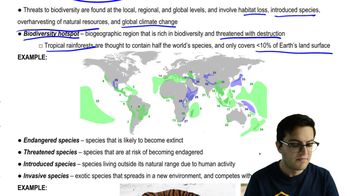
Threats include habitat loss, introduced species, overharvesting, and global climate change at local, regional, and global levels.
A biodiversity hotspot is a biogeographic region rich in species but threatened with destruction, e.g., tropical rainforests.
Endangered species are likely to become extinct; threatened species are at risk of becoming endangered.
Introduced species live outside their natural range due to humans; invasive species spread rapidly and compete with native species.
Overexploitation is harvesting a renewable resource to the point of diminishing returns, common in marine species.
Habitat destruction makes habitats unable to support species; habitat degradation reduces habitat quality, including fragmentation and edge effects.
Habitat fragmentation breaks continuous habitat into smaller isolated patches, increasing extinction risk and edge effects.
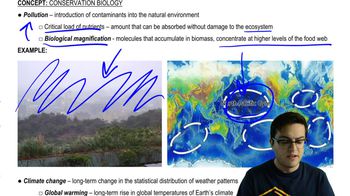
Biological magnification is the accumulation of toxic molecules in organisms, increasing concentration at higher food web levels.
Global warming is the long-term rise in Earth's temperatures caused by greenhouse gases absorbing and emitting thermal radiation.
The extinction vortex is a downward spiral where small populations suffer inbreeding and genetic drift, increasing extinction risk.
Minimum viable population is the smallest population size that can survive without facing extinction.
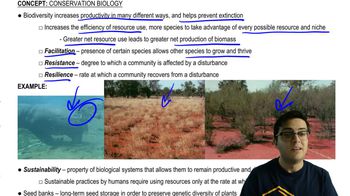
Biodiversity increases productivity by improving resource use efficiency, facilitating species growth, and enhancing resistance and resilience to disturbances.
Sustainability is the ability of biological systems to remain productive and diverse by using resources at rates they can be replaced.
Seed banks store seeds long-term to preserve genetic diversity; ex situ conservation preserves endangered species outside their natural habitats.
A nature reserve is a protected area of biological importance; a wildlife corridor connects habitats to maintain population diversity.
Assisted migration is the deliberate movement of plants or animals to new habitats to help conserve species.