 뒤로
뒤로Cell Parts Vocabulary - General Biology
 04:26
04:26
이 집합의 용어 (18)
A membrane-bound organelle in plant cells and algae that conducts photosynthesis, capturing light energy to produce glucose and oxygen.
The thick, gel-like fluid inside a cell that holds organelles in place and is the site for many metabolic reactions.
A dynamic network of protein filaments and tubules providing structural support, maintaining cell shape, and aiding movement and intracellular transport.
An extensive network of folded membranes involved in synthesis, folding, modification, and transport of proteins and lipids.
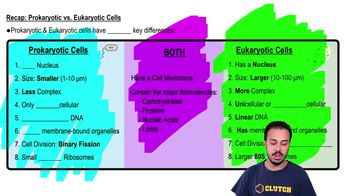
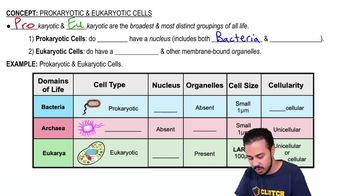
A complex cell containing a membrane-bound nucleus and specialized membrane-bound organelles (e.g., plant, animal, fungal, protist cells).
A stack of flattened membranous sacs that modifies, sorts, and packages proteins and lipids from the ER for secretion or transport.
A membrane-bound sac with digestive enzymes that breaks down waste, cellular debris, foreign invaders, and worn-out organelles.
The cell's powerhouse where cellular respiration converts nutrients into usable chemical energy (ATP).
A dense structure inside the nucleus responsible for producing and assembling ribosome subunits.
The control center of a eukaryotic cell, surrounded by a double membrane and housing the cell's genetic material (DNA).
Specialized structures within a cell that perform specific metabolic functions necessary for cellular life and homeostasis.
A selectively permeable phospholipid bilayer surrounding the cell that regulates entry and exit of substances, protecting the internal environment.
A simpler, usually smaller cell lacking a membrane-bound nucleus or organelles (e.g., bacteria and archaea).
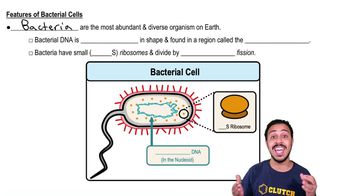
A small structure of RNA and proteins that translates messenger RNA to synthesize proteins; can be free in cytoplasm or bound to rough ER.
The ER portion studded with ribosomes, primarily involved in synthesizing and processing proteins.
The ER portion lacking ribosomes, specialized for lipid synthesis, carbohydrate metabolism, and detoxification.
Small membrane-enclosed sacs that shuttle proteins, lipids, and molecules between compartments or to the plasma membrane for secretion.
A membrane-bound storage organelle holding water, nutrients, or waste; plant cells have a large central vacuole maintaining turgor pressure.