 뒤로
뒤로Chapter 22-23 Vocab
 03:22
03:22
이 집합의 용어 (52)
pattern of evolution
Facts/data that show evolution over time: revealed by data from scientific disciplines: biology, chemistry, etc.
process of evolution
mechanisms that cause the observed pattern of change/evolution
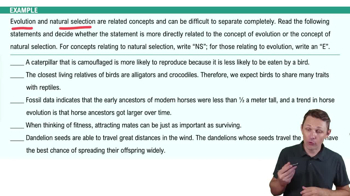
evolution
a change in populations over generations inheriting genetic traits from ancestors while adapting to environments
adaptations
inherited characteristics of organisms that enhance their survival and reproduction in specific environments
natural selection
a process where individuals that have certain inherited traits tend to survive and reproduce at higher rates because of those traits
homology
similarity resulting from common ancestry
homologus structures
represent variations on a structural theme that was present in their common ancestor; show evidence of relatedness. (arms, forelegs, flippers, and wings)
vestigal structures
remnants of features that served a function in the organisms ancestors. (ex. tailbone - coccyx)
analogus structures
similar solutions to similar problems but do not indicate close relatedness. (bird wing, butterfly wing)
convergent evolution
the independent evolution of similar features in different lineages; analogy; usually the result of evolution to similar environments
biogeography
the scientific study of the geographic distributions of species
evidence of evolution
1 homology
2 fossils
3 biogeography
4 drug resistant bacteria
trade-offs
when an increase in one trait, feature, or behavior results in a simultaneous decrease or cost in anothe
evolutionary processes
1 natural and sexual selection
2 genetic drift
3 gene flow
4 mutation
sexual selection
females choose while males compete
gene flow
occurs when individuals/gametes move from one population to another (can lead to reduced fitness in some populations)
genetic drift
change in allele frequency due to chance; describes how allele frequencies fluctuate randomly from one generation to the next
mutation
a permanent change in the DNA or RNA sequence of an organism or virus
sources of genetic variation
1 formation of new alleles (genes); mutation
2 altering gene # or location; chromosomal mutations
3 rapid reproduction; mutation rates constant
4 sexual reproduction; recombination of chromosomes
phenotype
external expression of a genotype
genotype
an individual's unique set of genetic instructions, or the specific sequence of DNA inherited from parents
founder effect
occurs when few individuals start new population in new area; founder population usually smaller than source population; disproportionate effect of genetic drift
population bottle neck
a sharp, sudden reduction in the size of a population caused by environmental disasters or human activities usually caused by traumatic event and severely decreases genetic diversity
types of selection
1 directional
2 stabilizing
3 disruptive
directional selection
increases frequency of allele, reduces genetic diversity, favored alleles become fixed
frequency of 1.0/100, disadvantageous alleles decline in frequency.
changes the average value of a trait (favors one extreme characteristic)
stabilizing selection
intermediate traits reproduce more than others, reduces population's genetic diversity over time, no change in average value of trait over time
reduces variation (favors the average trait)
disruptive selection
intermediate phenotypes selected against, extreme phenotypes, maintains genetic diversity, can cause speciation
increases the amount of variation (favors the most fit and least fit)
sexual dimorphism
traits differing between males/females of the same species; often differ sharply
speciation
a lineage-splitting event that produces two or more separate species; occurs when population is split and they live in different geographic locations
formation of a new species if individuals with one extreme of trait start mating preferentially with those that have the same trait
gametes
an organisms reproductive cells; sex cells
allele
one of two or more alternative forms of a gene that arise by mutation and are found at the same place on a chromosome; specific variation (blue or brown eye color)
gene
the basic physical and functional unit of heredity, made up of a specific sequence of DNA that provides instructions for building proteins; general section (eye color)
species
evolutionarily independent population or group of populations
prezygotic barriers
impede mating or prevent fertilization if mating does not occur
habitat isolation, temporal isolation, behavioral isolation, mechanical isolation, gametic isolation
postzygotic barriers
result in fetal death and/or infertile offspring
reduced hybrid viability, reduced hybrid fertility, hybrid breakdown
allopatric speciation
geographic; a population forms a new species while geographically isolated from its parent population
sympatric speciation
no separation; a subset of a population forms a new species without geographic separation
no physical barrier preventing gene flow, isolation based on habitat preferences
genetic isolation
occurs when populations are separated (river/mountain range/etc., when individuals cannot cross a barrier, leads to no gene flow)
polyploidy
duplication of chromosomes; usually from multiple closely related species
3 possible outcomes of hybrid/interbreeding
reinforcement
fusion
stability
reinforcement
strengethen reproductive barriers
fusion
breakdown of reproductive barriers
stability
continued reproduction of hybrids
reproductive barriers
a collection of behaviors, physiological processes, and genetic traits that stop members of different species from producing viable, fertile offspring
habitat isolation
when two species or populations living in the same geographic region occupy different specific habitats, preventing them from meeting and mating
temporal isolation
an evolutionary mechanism when two populations or species prevent interbreeding by reproducing at different times, such as different hours of the day, seasons, or years.
behavioral isolation
prezygotic barrier where differences in courtship rituals, mating calls, or signals prevent closely related populations or species from interbreeding.
mechanical isolation
a physical difference in reproductive structures that stops different species from mating
gametic isolation
when the sperm and egg cells of different species are chemically or molecularly incompatible, preventing them from fusing into a zygote
reduced hybrid viability
when hybrid offspring resulting from the mating of two different species have a lower chance of surviving to maturity
reduced hybrid fertility
when offspring resulting from the mating of two different species survive to adulthood but are sterile or have low capacity to reproduce
hybrid breakdown
when the first-generation (F₁) hybrid of two species or subspecies is healthy and fertile, but the subsequent generation (F₂) or backcross offspring suffer from reduced fitness, sterility, or death.