 뒤로
뒤로Chapter 7
 03:32
03:32
이 집합의 용어 (21)
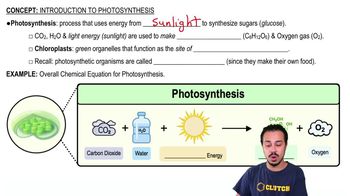
Photosynthesis is the process that uses energy from sunlight to synthesize sugars (glucose) from CO2 and H2O, producing oxygen as a byproduct.
Photosynthesis occurs in chloroplasts, which have a double membrane, stacks of thylakoids, and a fluid called stroma.
Photoautotrophs are organisms like plants, algae, and some bacteria that produce organic molecules from inorganic molecules using light energy.
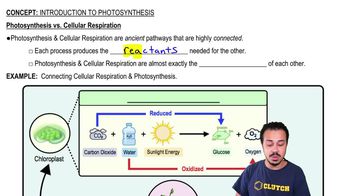
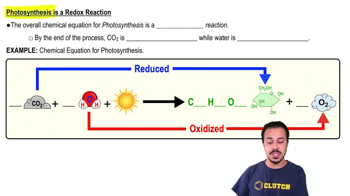
Water (H2O) is oxidized (loses electrons) and carbon dioxide (CO2) is reduced (gains electrons) to form glucose and oxygen.
The light reactions occur in the thylakoid membranes producing ATP and NADPH, and the Calvin cycle occurs in the stroma, using ATP and NADPH to fix CO2 into sugar.
Pigments like chlorophyll absorb specific wavelengths of visible light to capture energy for photosynthesis; carotenoids also protect from excess light.
Photosystems are complexes in thylakoid membranes with light-harvesting pigments and a reaction center that capture light energy to excite electrons.
Electrons flow from photosystem II to photosystem I via an electron transport chain, producing ATP and NADPH; water is split to replace electrons, releasing O2.
Chemiosmosis uses the H+ gradient created by the electron transport chain to drive ATP synthesis via ATP synthase in the thylakoid membrane.
1. Carbon fixation by rubisco adding CO2 to RuBP.
2. Reduction to form G3P using ATP and NADPH.
3. Regeneration of RuBP using ATP.
Rubisco is the enzyme that fixes CO2 to RuBP in the Calvin cycle, initiating carbon fixation.
Closing stomata to prevent water loss reduces CO2 intake and increases O2, causing photorespiration which wastes energy and reduces photosynthesis efficiency.
They fix CO2 into 4-carbon compounds first, which supply CO2 to the Calvin cycle even when stomata are closed, reducing photorespiration.
Photorespiration occurs when rubisco fixes O2 instead of CO2, producing CO2 and wasting ATP and NADPH, reducing photosynthesis efficiency.
ATP and NADPH are produced in the light reactions and used in the Calvin cycle to fix carbon and synthesize sugars.
The Calvin cycle uses 6 CO2, 9 ATP, and 6 NADPH molecules to produce one glucose molecule.
Photosynthesis produces glucose and O2 used in cellular respiration; cellular respiration produces CO2 and H2O used in photosynthesis. They are complementary processes.
Plants use sugar for energy via cellular respiration, as raw material for organic molecules like cellulose, or store excess sugar as starch.
Higher CO2 levels increase photosynthesis and pollen production, potentially worsening allergies and extending growing seasons.
The greenhouse effect is caused by gases like CO2 trapping heat; photosynthesis reduces atmospheric CO2, helping moderate climate change.
The Paris Agreement aims to reduce greenhouse gas emissions globally to limit warming; scientists, politicians, and citizens all play roles in achieving this.