 뒤로
뒤로DNA Tools and Biotechnology
 03:12
03:12
이 집합의 용어 (21)
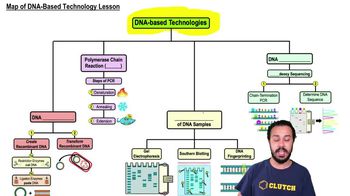
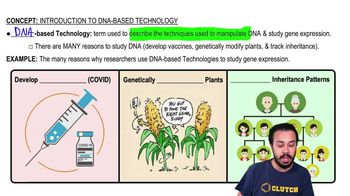
DNA technology refers to the main technologies for sequencing and manipulating DNA, including genetic engineering which is the direct manipulation of genes for practical purposes.
DNA sequencing is the process used to determine the complete nucleotide sequence of a gene.
DNA cloning is making multiple identical copies of a specific gene or DNA segment, often using plasmids as cloning vectors.
Bacterial plasmids are used because they are readily obtained, easily manipulated, introduced into bacterial cells, and rapidly multiplied inside bacteria.
Restriction enzymes cut DNA at specific sequences called restriction sites, often producing sticky ends that can bond with complementary fragments to form recombinant DNA.
DNA ligase seals the bonds between restriction fragments, joining DNA pieces from different sources to create recombinant DNA molecules.
Gel electrophoresis separates DNA fragments by size; shorter fragments move faster through the gel's microscopic holes than longer fragments.
Polymerase Chain Reaction (PCR) amplifies DNA through cycles of denaturation (heating), annealing (cooling), and extension (DNA synthesis), producing many copies of a target DNA segment.
Taq polymerase is a heat-stable DNA polymerase used in PCR to synthesize new DNA strands during the extension step.
DNA can be amplified from sources like ancient frozen specimens, fingerprints, tiny blood or tissue samples, single embryonic cells, and virus-infected cells.
Nucleic acid hybridization detects specific mRNAs by using complementary DNA or RNA probes that bind to the target sequences.
In situ hybridization uses fluorescently labeled probes to locate specific mRNAs within intact tissues or organisms.
Reverse transcriptase PCR (RT-PCR) converts mRNA into complementary DNA (cDNA) to compare amounts of specific mRNAs across samples.
Organismal cloning produces genetically identical organisms by transplanting a nucleus from a donor cell into an enucleated egg cell.
Nuclear transplantation replaces the nucleus of an egg or zygote with the nucleus of a differentiated cell to create a cloned organism.
Dolly was the first mammal cloned from an adult differentiated cell by nuclear transplantation, demonstrating cloning of adult cells.
Stem cells are unspecialized cells that can reproduce indefinitely and differentiate into one or more specialized cell types.
Embryonic stem cells are pluripotent and can become many cell types; adult stem cells generate a limited number of cell types for tissue maintenance.
Therapeutic cloning aims to produce embryonic stem cells for treating diseases by cloning cells without creating a full organism.
GWAS analyze genomes of many individuals to find genetic markers like SNPs associated with specific inherited conditions.
Single nucleotide polymorphisms (SNPs) are genetic markers that help locate disease-causing genes by association, though they rarely cause disease themselves.