 뒤로
뒤로Exam 4
 02:17
02:17
이 집합의 용어 (38)
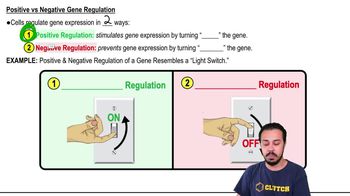
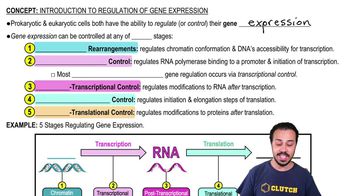
Transcriptional control is the first level of gene expression regulation in eukaryotes.
Transcription factors play a role in regulating transcription in both prokaryotic and eukaryotic cells.
A repressor protein binds to the operator to turn off transcription.
It is controlled by an operon, a group of genes transcribed together under one promoter.
Gene expression is the process where the genetic code (genotype) is used to produce traits (phenotype).
Cell differentiation is the process by which cells become specialized in structure and function.
Introns are non-coding sequences within a gene that are removed during RNA splicing.
Through alternative RNA splicing, different exons are joined to create multiple polypeptides from one transcript.
Different gene expression patterns in cells lead to tissue-specific functions.
Restriction enzymes cut DNA in a staggered way, producing single-stranded overhangs called sticky ends.
The complementary sticky end is -TAAGC, which can base pair with -ATTCG.
DNA fingerprinting analyzes DNA patterns to identify individuals from biological samples.
Gel electrophoresis separates DNA fragments based on size by applying an electric field.
It enables understanding of all human genes, aiding in disease diagnosis, treatment, and personalized medicine.
Issues include privacy, genetic discrimination, cloning, and consent for genetic information use.
Because DNA fragments differ in size and move through the gel matrix at different rates.
Natural selection is the process where organisms better adapted to their environment tend to survive and reproduce.
It provided observations that contributed to the development of the theory of evolution by natural selection.
Lyell proposed that Earth is very old and shaped by slow geological processes still occurring today.
Oncogene is a gene that can cause cancer when mutated or expressed at high levels.
Tobacco smoke is one of the most potent environmental carcinogens.
Smoking, excessive alcohol, poor diet, and UV exposure increase cancer risk.
A transgenic animal contains genes from another species inserted into its genome.
Vaccines stimulate the immune system to recognize and fight specific pathogens without causing disease.
Common vectors include plasmids and viruses engineered to carry foreign DNA.
Cutting DNA with restriction enzymes to create compatible ends is the first step.
Plasmids carry the gene into host cells, which then express the protein encoded by the gene.
Paleontology is the scientific study of fossils.
Homology indicates common ancestry between species.
The population is the smallest unit in which evolution occurs.
The alternate allele frequency is \(0.3\) (1 - 0.7).
\(p^2\) represents the frequency of homozygous dominant genotype.
Mutations are the original source of genetic variation.
Founder effect is when a new population is started by a few individuals; bottleneck is a sharp reduction in population size.
It measures an organism's reproductive success relative to others.
Selection favoring average traits, such as human birth weight, is stabilizing selection.
Traits like peacock feathers that increase mating success are examples of sexual selection.
The amnion is a key feature of amniotes, located on the branch leading to reptiles, birds, and mammals.