 뒤로
뒤로General Biology: Basic Chemistry and Biomolecules
 02:13
02:13
이 집합의 용어 (48)
Matter is anything that has mass and occupies space.
An element is a pure substance made of only one type of atom.
A compound is a substance formed when two or more elements chemically combine.
An atom is the smallest unit of an element that retains its chemical properties.
The nucleus is the atom's central core containing protons and neutrons.
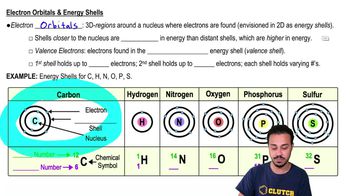
Electron shells are energy levels around the nucleus where electrons orbit.
An ion is an atom or molecule with a net electric charge due to loss or gain of electrons.
An ionic bond forms when electrons are transferred between atoms, creating oppositely charged ions.
A covalent bond is a chemical bond where atoms share electron pairs.
Isomers are molecules with the same molecular formula but different structures.
A polar molecule has an uneven distribution of charge, resulting in partial positive and negative ends.
A hydrogen bond is a weak attraction between a hydrogen atom and an electronegative atom.
Cohesion is the attraction between molecules of the same substance, like water molecules sticking together.
Surface tension is the force that allows the surface of a liquid to resist external force.
Adhesion is the attraction between different substances, such as water and plant cell walls.
Capillary action is the movement of water within narrow spaces due to cohesion and adhesion.
A solution is a homogeneous mixture of two or more substances.
The solvent is the substance that dissolves the solute in a solution, often water.
The solute is the substance dissolved in the solvent in a solution.
Acids are substances that increase hydrogen ion (H+) concentration in solution.
Bases are substances that decrease hydrogen ion concentration, often by releasing OH- ions.
Buffers help maintain stable pH by neutralizing excess acids or bases.
Homeostasis is the maintenance of a stable internal environment in an organism.
Hydrophobic molecules repel water and do not dissolve easily in it.
Organic compounds contain carbon atoms bonded to hydrogen and other elements.
Hydrocarbons are organic molecules made only of carbon and hydrogen atoms.
Macromolecules are large molecules made of smaller subunits called monomers.
Monomers are small building blocks; polymers are chains of monomers linked together.
Dehydration synthesis is the process of joining monomers by removing water.
Hydrolysis breaks polymers into monomers by adding water.
Carbohydrates are macromolecules made of saccharides that provide energy and structural support.
A monosaccharide is a single sugar molecule, like glucose.
A disaccharide is formed by two monosaccharides joined together.
Polysaccharides are long chains of monosaccharides, such as starch, glycogen, and cellulose.
Lipids are hydrophobic macromolecules including fats, oils, phospholipids, and steroids.
A triglyceride consists of glycerol bonded to three fatty acids.
Saturated fatty acids have no double bonds; unsaturated fatty acids have one or more double bonds.
Phospholipids have hydrophilic heads and hydrophobic tails, forming cell membranes.
Steroids are lipids with four fused rings, including cholesterol and sex hormones.
Proteins are polymers of amino acids that perform diverse functions in cells.
Amino acids are the monomers that make up proteins.
A peptide bond links amino acids together in a protein chain.
Enzymes are proteins that speed up chemical reactions by lowering activation energy.
Denaturation is the loss of a protein's shape and function due to environmental changes.
Nucleic acids store genetic information; examples are DNA and RNA.
Nucleotides are the monomers of nucleic acids, composed of a sugar, phosphate, and nitrogenous base.
The sugar-phosphate backbone forms the structural framework of nucleic acids.
DNA stores genetic information; RNA helps in protein synthesis.