 뒤로
뒤로General Biology Basics
 02:09
02:09

이 집합의 용어 (20)
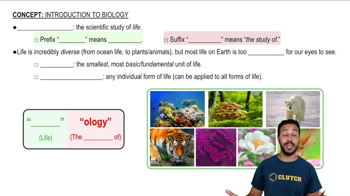
Biology is the scientific study of life and living organisms.
Living organisms exhibit growth, reproduction, response to stimuli, metabolism, and homeostasis.
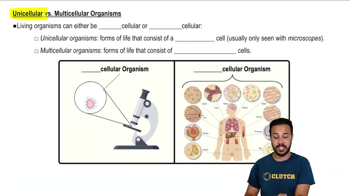
The cell theory states that all living things are made of cells, cells are the basic unit of life, and all cells come from pre-existing cells.
Prokaryotic cells lack a nucleus, while eukaryotic cells have a nucleus and membrane-bound organelles.
DNA (deoxyribonucleic acid) is the molecule that carries genetic information in living organisms.
Metabolism is the sum of all chemical reactions that occur within an organism to maintain life.
Homeostasis is the process by which organisms maintain a stable internal environment despite external changes.
Natural selection is the process where organisms better adapted to their environment tend to survive and produce more offspring.
Levels include molecule, cell, tissue, organ, organ system, organism, population, community, ecosystem, and biosphere.
An ecosystem is a community of living organisms interacting with their physical environment.
Enzymes are biological catalysts that speed up chemical reactions without being consumed.
Photosynthesis is the process by which plants convert light energy into chemical energy stored in glucose.
Cellular respiration is the process of breaking down glucose to produce energy in the form of ATP.
Mitosis produces two identical daughter cells; meiosis produces four genetically diverse gametes.
A gene is a segment of DNA that codes for a specific protein or trait.
The central dogma describes the flow of genetic information: DNA → RNA → Protein.
Biodiversity refers to the variety of life forms in a given area or on Earth as a whole.
An organelle is a specialized structure within a cell that performs a specific function.
Mitochondria are the powerhouse of the cell, producing ATP through cellular respiration.
Osmosis is the diffusion of water across a selectively permeable membrane.