 뒤로
뒤로General Biology: Cellular Respiration and Photosynthesis
 01:53
01:53
이 집합의 용어 (21)
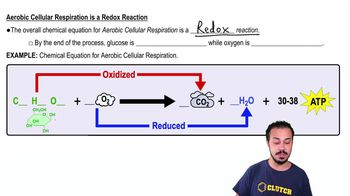
Oxygen acts as the final electron acceptor in cellular respiration, allowing the breakdown of food molecules to generate ATP and heat.
A process that breaks down glucose and other food molecules in the presence of oxygen to produce ATP, the cell's energy currency.
Breathing supplies oxygen needed for cellular respiration and removes carbon dioxide, a waste product of the process.
ATP stores and transports chemical energy inside cells to power biological activities.
Glycolysis is the first stage of cellular respiration that splits glucose into two pyruvate molecules; it occurs in the cytosol.
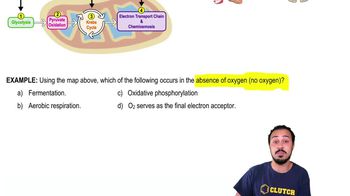
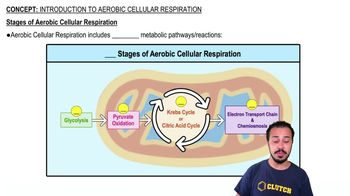
1. Glycolysis, 2. Pyruvate oxidation and citric acid cycle, 3. Oxidative phosphorylation (electron transport and chemiosmosis).
Acetyl CoA is oxidized to CO2, producing NADH, FADH2, and ATP, completing glucose breakdown.
Electrons from NADH and FADH2 pass through the electron transport chain, creating a proton gradient that drives ATP synthesis.
About 34% of the energy stored in glucose is captured as ATP; the rest is lost as heat.
A way to produce ATP anaerobically by recycling NAD+ from NADH when oxygen is absent, producing lactate or alcohol and CO2.
The process by which plants, algae, and some bacteria convert light energy into chemical energy stored in glucose.
In chloroplasts, mainly within the mesophyll cells of leaves.
Two membranes enclosing stroma and thylakoid membranes stacked into grana, containing chlorophyll pigments.
Chlorophyll absorbs light energy, exciting electrons to start the light reactions.
Light reactions (produce ATP and NADPH) and the Calvin cycle (uses ATP and NADPH to synthesize glucose).
Water is split (photolysis), oxygen is released, and ATP and NADPH are produced using light energy.
A cycle in the stroma that fixes CO2 into organic molecules like G3P, which are used to build glucose.
Photosystems I and II capture light energy, transfer excited electrons, and drive ATP and NADPH production.
It provides food and oxygen for almost all living organisms and helps moderate climate by reducing CO2.
Glycolysis, pyruvate oxidation, Krebs cycle (citric acid cycle), electron transport chain and chemiosmosis.
Prokaryotes reproduce by binary fission, a form of asexual reproduction.