 뒤로
뒤로General Biology: Chemical Context of Life
 02:13
02:13
이 집합의 용어 (20)
Matter is anything that takes up space and has mass, including rocks, metals, oils, gases, and living organisms.
An element is a substance that cannot be broken down into other substances by chemical reactions and consists of one type of atom.
Chemists recognize 92 natural elements occurring in nature.
A compound is a substance made of two or more different elements combined in a fixed ratio with properties different from its elements.
Table salt (sodium chloride, NaCl) is a compound of sodium (Na) and chlorine (Cl) in a 1:1 ratio.
Oxygen (O), carbon (C), hydrogen (H), and nitrogen (N) make up about 96% of living matter.
Trace elements are elements required by organisms in minute quantities, such as iron (Fe) and iodine (I).
Iodine (I) is essential for producing a hormone by the thyroid gland; a daily intake of 0.15 mg is adequate for normal thyroid activity.
An atom is the smallest unit of matter that retains the properties of an element.
Each element consists of atoms unique to that element, symbolized by the element's abbreviation (e.g., C for carbon).
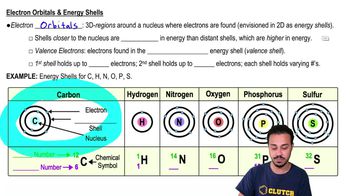
An element's properties depend on the structure of its atoms, including the arrangement of electrons.
Valence electrons determine an atom's ability to form chemical bonds.
Oxygen can form two bonds because it has space for two more electrons in its outer shell.
Emergent properties mean a compound has characteristics different from those of its individual elements.
When sodium and chlorine chemically combine, they form sodium chloride, an edible compound unlike its toxic elements.
Electronegativity affects how atoms attract electrons in bonds, influencing molecule polarity and reactivity.
Arsenic is toxic to humans and linked to diseases; it can contaminate groundwater in some regions.
Some plants have evolved to survive in soils with toxic elements like chromium and nickel, such as those in serpentine soils.
Oxygen makes up approximately 65.0% of human body mass.
Calcium (Ca), phosphorus (P), and potassium (K) are essential elements making up most of the remaining ~4% of body mass.