 뒤로
뒤로General Biology Final Exam Key Concepts
 03:32
03:32
이 집합의 용어 (30)
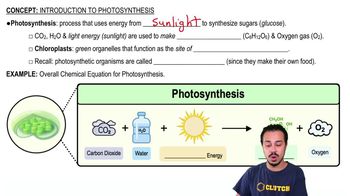
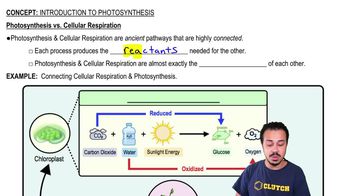
Thylakoids contain chlorophyll in chloroplasts.
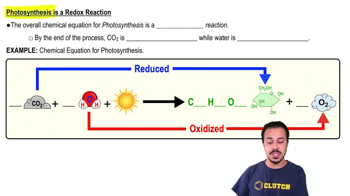
Oxygen released comes from splitting water molecules.
Light reactions occur on and inside the thylakoid membrane.
The Calvin cycle occurs in the stroma of the chloroplast.
ATP and NADPH provide energy for the Calvin cycle.
Redox reactions transfer electrons.
Green light is least effective for photosynthesis.
CO2 enters through the stomata.
Thylakoids are arranged in stacks called grana.
ATP synthase uses a hydrogen ion (H+) gradient.
Chlorophyll is the pigment at the reaction center.
The light reactions stage produces oxygen.
The Calvin cycle produces sugar molecules.
Plants cannot perform photosynthesis without CO2.
RuBP accepts CO2 to keep the Calvin cycle going.
The Calvin cycle must run 6 times to produce one glucose.
Interphase includes G1, S, and G2 phases.
DNA replication occurs before a cell divides.
Sister chromatids are identical copies of the original chromosome's DNA molecule.
Chromosomes align during metaphase.
Chromatids separate during anaphase.
The nuclear membrane reforms during telophase.
Mitosis produces genetically identical daughter cells.
Meiosis produces haploid gametes.
Crossing over occurs during Prophase I of meiosis.
Homologous chromosomes are matching pairs in a diploid cell.
Nondisjunction causes abnormal gametes, such as in Down syndrome.
Growth stops or slows due to crowding.
Asexual reproduction requires one parent.
Sexual reproduction increases genetic variation.