 뒤로
뒤로General Biology: Genetics and Chromosome Abnormalities
 03:42
03:42
이 집합의 용어 (29)
Recombination frequency measures the relative distance between two genes and is calculated as recombinants/total offspring × 100%. 1% recombination frequency equals 1 map unit or 1 centimorgan.
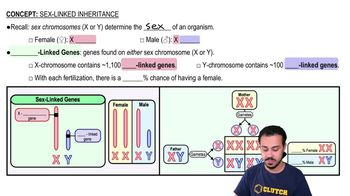
In mammals, males are heterogametic with XY chromosomes, while females are homogametic (XX).
In birds, fish, and reptiles, females are heterogametic with ZW chromosomes, and males are homogametic (ZZ).
In social insects, females are diploid and males are haploid, produced from unfertilized eggs by parthenogenesis.
The SRY gene on the Y chromosome is responsible for testes development and male sex determination.
PAR allows for synapsis between X and Y chromosomes during meiosis despite their differences.
Linked genes are inherited together because they are close on the same chromosome; sex-linked genes are located specifically on sex chromosomes (X or Y).
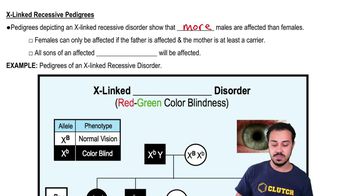
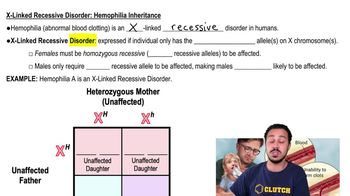
Common X-linked diseases include color blindness, hemophilia, and Duchenne muscular dystrophy.
A recombination frequency of 50% or more indicates genes assort independently, as if on different chromosomes.
Linked genes are denoted with a slash separating alleles on homologous chromosomes, e.g., AB/ab.
Nondisjunction is the failure of homologous chromosomes or sister chromatids to separate during meiosis I or II, causing aneuploidy.
Meiosis I nondisjunction produces no normal gametes and is more detrimental; meiosis II nondisjunction produces some normal gametes and is less detrimental.
Aneuploidy is an abnormal chromosome number: trisomy (2n + 1) or monosomy (2n – 1).
Common trisomies include Down syndrome (trisomy 21), Edwards syndrome (trisomy 18), and Patau syndrome (trisomy 13).
Polyploidy involves extra sets of chromosomes, often resulting in increased vigor, size, and survival, and is less detrimental than aneuploidy.
One X chromosome in females is randomly inactivated by XIST RNA, leading to mosaicism, e.g., tortoiseshell cats.
Single chromosome mutations include deletion, duplication, and inversion, which can affect gene expression.
Two-chromosome mutations include translocation and reciprocal translocation, involving exchange of chromosome parts between nonhomologous chromosomes.
Down syndrome (trisomy 21) features include flat face, upward slanting eyes, protruding tongue, mental retardation, and mosaicism; risk increases with maternal age.
Cri-du-chat syndrome is caused by deletion on chromosome 5, characterized by microcephaly, distinct facial features, and a cat-like cry.
Klinefelter syndrome results from extra X chromosomes in males, leading to more feminine traits.
Turner syndrome is monosomy X, causing sterility and heart problems; it is the only viable monosomy in humans.
The Philadelphia chromosome is a translocation associated with chronic myelogenous leukemia.
Pericentric inversions involve the centromere and can change chromosome arm lengths; paracentric inversions do not involve the centromere.
Genomic imprinting causes monoallelic expression depending on the parent of origin, due to methylation silencing one allele.
Extranuclear genes in mitochondria and chloroplasts are inherited maternally and can affect traits like ATP production.
Mitochondrial DNA is inherited from the mother only, tracing a single lineage, unlike nuclear DNA from all ancestors.
Defects in mitochondrial genes can cause diseases affecting muscles and neurons, such as mitochondrial myopathies and Leber’s hereditary optic neuropathy.
Techniques involve transferring the mother’s nuclear DNA into a donor egg with healthy mitochondria to reduce mitochondrial disease risk.