Skip to main content
General Biology
나의 코스
배우기
시험 준비
AI 튜터
학습 가이드
교과서적 해결책
플래시카드
탐험해 보세요
앱을 사용해 보세요
나의 코스
배우기
시험 준비
AI 튜터
학습 가이드
교과서적 해결책
플래시카드
탐험해 보세요
앱을 사용해 보세요
뒤로
General Biology: Inorganic Chemistry Basics
카드를 뒤집기 위해 탭할 수 있습니다.
What are the three main subatomic particles in an atom?
카드를 뒤집기 위해 탭할 수 있습니다.
👆
What are the three main subatomic particles in an atom?
Protons
,
neutrons
, and
electrons
.
진행 상황 추적
컨트롤 버튼이 '내비게이션' 모드로 변경되었습니다.
1/25
추천 영상
02:13
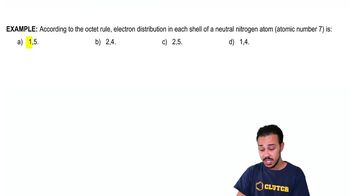
Atoms- Smallest Unit of Matter Example 1
26940
views
705
rank
2
comments
03:51
Atoms- Smallest Unit of Matter Example 3
17339
views
371
rank
1
comments
09:44
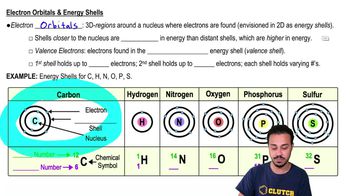
Electron Orbitals & Energy Shells
24324
views
502
rank
이 집합의 용어 (25)
하이드의 정의
What are the three main subatomic particles in an atom?
Protons
,
neutrons
, and
electrons
.
Where are protons and neutrons located in an atom?
In the
nucleus
, the core of the atom.
What is the valence shell of an atom?
The
outermost electron shell
that determines how the atom interacts with other atoms.
Define isotopes.
Variations of an element with different numbers of
neutrons
.
What is the difference between stable and radioactive isotopes?
Stable isotopes have unchanged nuclear structure; radioactive isotopes have nuclei that
break down over time
.
What is an ion?
A charged atom that has
gained or lost electrons
.
Describe a covalent bond.
A bond where atoms
share electrons
to complete their valence shells.
What is the difference between single and double covalent bonds?
Single bonds share
one pair
of electrons; double bonds share
two pairs
.
What makes a molecule polar?
When two atoms
unequally share electrons
, creating an asymmetrical charge distribution.
Give an example of a non-polar molecule.
Methane (CH4)
, where electrons are shared equally.
Give an example of a polar molecule.
Water (H2O)
, where electrons are shared unequally.
What is an ionic bond?
A bond formed when electrons are
transferred
between atoms, creating charged ions that attract.
Define cation and anion.
A
cation
is a positively charged ion; an
anion
is a negatively charged ion.
What is an electrolyte?
An ionic compound that
dissociates into ions
in solution.
Describe hydrogen bonding.
A weak attraction between a slightly positive hydrogen and a nearby electronegative atom.
What are the three states of matter relevant to biology?
Gas
,
liquid
, and
solid
, differing in molecular arrangement and motion.
What is a solvent?
A substance, like water, that
dissolves
other substances.
Define hydrophilic and hydrophobic solutes.
Hydrophilic
solutes dissolve in water;
hydrophobic
solutes do not.
Why is water important for life?
It is a solvent, participates in chemical reactions, has high heat capacity, and is cohesive and adhesive.
What happens when acids dissociate in water?
They release
H+
ions.
What happens when bases dissociate in water?
They release
OH-
ions.
What is the pH scale used for?
Measuring the
acidity or alkalinity
of a solution.
What are salts in biological chemistry?
Compounds that dissociate in water but do not produce
H+
or
OH-
ions.
What is dehydration synthesis?
A chemical reaction where water is
removed
to join molecules.
What is hydrolysis?
A chemical reaction where water is
added
to break molecules apart.
 뒤로뒤로
뒤로뒤로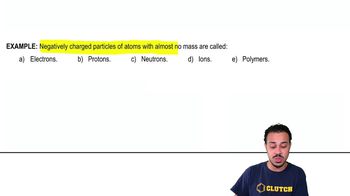
 02:13
02:13