Skip to main content
General Biology
나의 코스
배우기
시험 준비
AI 튜터
학습 가이드
교과서적 해결책
플래시카드
탐험해 보세요
앱을 사용해 보세요
나의 코스
배우기
시험 준비
AI 튜터
학습 가이드
교과서적 해결책
플래시카드
탐험해 보세요
앱을 사용해 보세요
뒤로
General Biology Key Concepts
카드를 뒤집기 위해 탭할 수 있습니다.
Cleavage furrow
카드를 뒤집기 위해 탭할 수 있습니다.
👆
Cleavage furrow
The indentation that begins the process of cytokinesis in animal cells, leading to cell division.
진행 상황 추적
컨트롤 버튼이 '내비게이션' 모드로 변경되었습니다.
1/30
추천 영상
02:59
Codominance
9343
views
104
rank
05:15
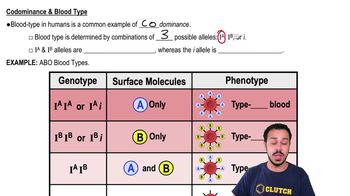
Codominance & Blood Type
9984
views
93
rank
03:09
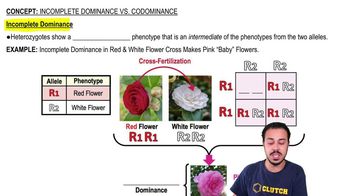
Incomplete Dominance
10252
views
129
rank
이 집합의 용어 (30)
하이드의 정의
Cleavage furrow
The indentation that begins the process of cytokinesis in animal cells, leading to cell division.
Co-dominance
A genetic scenario where both alleles in a heterozygote are fully expressed.
Polygenic inheritance
Inheritance pattern where multiple genes influence a single trait.
Non-disjunction
Failure of chromosome pairs to separate properly during meiosis, causing aneuploidy.
Biogeography
Study of the geographic distribution of species and ecosystems.
Hominoids
A group of primates including humans, chimpanzees, gorillas, and orangutans.
Mitosis
A cell division process producing two genetically identical diploid daughter cells.
Meiosis
A cell division process producing four genetically diverse haploid gametes.
Cyclins
Proteins that regulate the cell cycle by activating cyclin-dependent kinases.
Vestigial structures
Anatomical features that have lost their original function through evolution.
Comparative anatomy versus biochemistry
Comparative anatomy studies physical structures; biochemistry compares molecular and genetic similarities.
Bottleneck effect
A sharp reduction in population size leading to decreased genetic diversity.
Prophase I and crossing over
Stage in meiosis where homologous chromosomes exchange genetic material, increasing variation.
Cell differentiation
Process by which cells become specialized in structure and function.
Genotype versus phenotype
Genotype is the genetic makeup; phenotype is the observable traits.
Homo erectus
An extinct hominid species considered a direct ancestor of modern humans.
Mendel's contribution
Established the laws of inheritance based on pea plant experiments.
Epigenetics
Study of heritable changes in gene expression without changes to DNA sequence.
Homozygous versus heterozygous
Homozygous: two identical alleles; heterozygous: two different alleles for a gene.
Cri du chat syndrome
A genetic disorder caused by deletion on chromosome 5, characterized by a cat-like cry.
Diploid versus haploid
Diploid cells have two sets of chromosomes; haploid cells have one set.
Sex-linked versus sex-influenced traits
Sex-linked traits are on sex chromosomes; sex-influenced traits are autosomal but expressed differently by sex.
Adaptive radiation
Rapid evolution of diverse species from a common ancestor in response to new environments.
Australopithecus afarensis
An early hominid species known for bipedalism, exemplified by 'Lucy'.
Translocation (genetics)
Chromosomal abnormality where a segment moves to a nonhomologous chromosome.
Charles Darwin and survival of the fittest
Theory that individuals best adapted to their environment are more likely to survive and reproduce.
Alleles
Different versions of a gene found at the same locus on homologous chromosomes.
Sexual dimorphism
Differences in appearance between males and females of the same species.
Mendelian monohybrid cross
Cross between two heterozygotes to study inheritance of a single trait.
Genetic pedigree analysis
A chart used to track inheritance patterns of traits through generations.
 뒤로뒤로
뒤로뒤로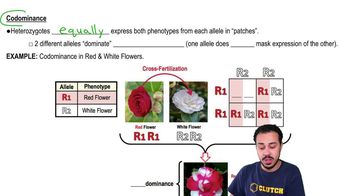
 02:59
02:59