Skip to main content
General Biology
나의 코스
배우기
시험 준비
AI 튜터
학습 가이드
교과서적 해결책
플래시카드
탐험해 보세요
앱을 사용해 보세요
나의 코스
배우기
시험 준비
AI 튜터
학습 가이드
교과서적 해결책
플래시카드
탐험해 보세요
앱을 사용해 보세요
뒤로
General Biology Key Concepts
카드를 뒤집기 위해 탭할 수 있습니다.
Conditions required for natural selection
카드를 뒤집기 위해 탭할 수 있습니다.
👆
Conditions required for natural selection
Variation
in traits,
heredity
of traits, and
selective pressure
causing differential reproductive success.
진행 상황 추적
컨트롤 버튼이 '내비게이션' 모드로 변경되었습니다.
1/38
추천 영상
07:48
Natural Selection Causes Adaptation
13477
views
311
rank
2
comments
02:57
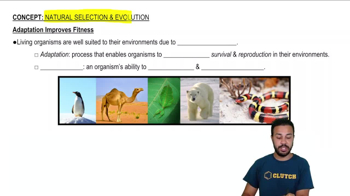
Adaptation Improves Fitness
16598
views
376
rank
1
comments
04:32
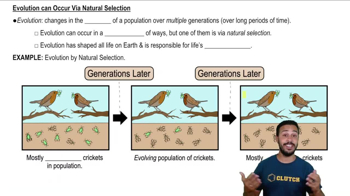
Evolution can Occur Via Natural Selection
11517
views
257
rank
2
comments
이 집합의 용어 (38)
하이드의 정의
Conditions required for natural selection
Variation
in traits,
heredity
of traits, and
selective pressure
causing differential reproductive success.
Difference between prokaryotic and eukaryotic cells
Prokaryotes lack a nucleus and membrane-bound organelles; eukaryotes have both, affecting their structure and function.
Function of cell organelles in eukaryotes
Organelles compartmentalize functions, increasing efficiency; missing organelles disrupt cell processes.
Role of the cytoskeleton
Maintains cell structure and organization using components like actin and microtubules for cellular processes.
Surface area to volume ratio importance
As cell size increases, ratio decreases, limiting efficient transport and affecting cell function.
Selective permeability of plasma membrane
Membrane allows certain molecules to pass while blocking others, regulating energy use, growth, and homeostasis.
Types of membrane transport
Passive diffusion
,
facilitated diffusion
,
active transport
,
osmosis
, and
bulk transport
differ by energy use and molecule type.
Structure and role of ATP
ATP stores energy in phosphate bonds and is the main energy currency for cellular activities.
Photosynthesis overview
Chloroplasts convert light energy to carbohydrates via photosystems I and II and the Calvin cycle in the chloroplast.
Effect of herbicides on photosynthesis
Inhibiting photosynthesis steps disrupts carbohydrate and oxygen production, affecting plant and ecosystem health.
Chemiosmosis in ATP production
Proton gradients drive ATP synthase to produce ATP in both cellular respiration and photosynthesis.
Four major steps of cellular respiration
Glycolysis, pyruvate oxidation, Krebs cycle, and electron transport chain with specific inputs and outputs.
Purpose of fermentation
Allows ATP production without oxygen by regenerating NAD+; inputs and outputs vary by type.
Alternate pathways for ATP production
Fats and proteins enter cellular respiration at different points to produce ATP; relates to weight changes.
Enzyme structure and function
3D structure and R group bonding affect enzyme efficiency; environmental factors can disrupt this.
Hydrophobic vs hydrophilic molecules
Hydrophobic repel water; hydrophilic attract water; this affects protein folding and membrane transport.
Role of enzyme inhibitors and feedback inhibition
Inhibitors block enzyme function; feedback inhibition regulates pathways by controlling enzyme activity.
DNA structure
Double helix of two strands with nucleotide bases paired via hydrogen bonds.
DNA replication process
DNA polymerase adds nucleotides to growing strand, copying genetic information.
From DNA to protein: transcription and translation
DNA transcribed to mRNA by RNA polymerase; mRNA translated to protein using codons and anticodons.
Alternative splicing
Generates protein diversity by producing different mRNAs from the same gene.
Levels of gene expression regulation
Includes chromatin remodeling, transcription factors, post-transcriptional modifications, and post-translational control.
Types of mutations and effects
Silent, nonsense, frameshift, and missense mutations alter proteins differently, affecting phenotype.
Sexual life cycle and meiosis
Meiosis produces haploid gametes; alternates with mitosis for growth and reproduction.
Haploid vs diploid
Haploid cells have one set of chromosomes; diploid have two; appear in meiosis and mitosis respectively.
Steps of meiosis and genetic diversity
Includes homologous chromosome pairing, crossing over, and segregation to increase variation.
Mitosis and identical daughter cells
Process of cell division producing two genetically identical somatic cells.
Homologous chromosomes vs sister chromatids
Homologous are chromosome pairs; sister chromatids are identical copies joined during mitosis/meiosis.
Gene mutations and cancer
Mutations in genes like p53 and ras disrupt cell cycle control, leading to cancer.
Tumor suppressors vs proto-oncogenes
Tumor suppressors prevent cancer; proto-oncogenes promote growth; mutations can cause cancer.
Role of cytoskeleton in cell division
Actin and microtubules organize and separate chromosomes; targets for cancer therapies.
Basic genetics terms
Allele, gene locus, dominant, recessive, homozygous, heterozygous, and Punnett square explained.
Patterns of inheritance beyond Mendel
Includes pleiotropy, polygenic inheritance, sex linkage, and codominance with examples.
Scientific techniques to study DNA
PCR, gel electrophoresis, restriction enzyme digest, and DNA profiling methods.
Independent vs dependent variables
Independent variable is manipulated; dependent variable is measured in experiments.
Bar graph vs line graph
Bar graphs compare categories; line graphs show trends over time.
Purpose of a control in experiments
Controls provide a baseline to compare experimental results.
Elements of a scientific hypothesis
A testable, falsifiable statement predicting a relationship between variables.
 뒤로뒤로
뒤로뒤로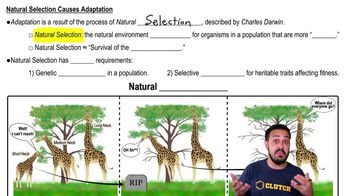
 07:48
07:48