Skip to main content
General Biology
나의 코스
배우기
시험 준비
AI 튜터
학습 가이드
교과서적 해결책
플래시카드
탐험해 보세요
앱을 사용해 보세요
나의 코스
배우기
시험 준비
AI 튜터
학습 가이드
교과서적 해결책
플래시카드
탐험해 보세요
앱을 사용해 보세요
뒤로
General Biology Key Concepts
카드를 뒤집기 위해 탭할 수 있습니다.
What is an organism?
카드를 뒤집기 위해 탭할 수 있습니다.
👆
What is an organism?
An
organism
is any living thing that can carry out life processes independently.
진행 상황 추적
컨트롤 버튼이 '내비게이션' 모드로 변경되었습니다.
1/17
추천 영상
09:26
Characteristics of Life
41679
views
1159
rank
8
comments
02:59
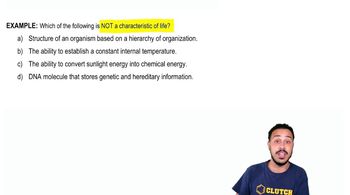
Characteristics of Life Example 1
23703
views
705
rank
3
comments
이 집합의 용어 (17)
하이드의 정의
What is an organism?
An
organism
is any living thing that can carry out life processes independently.
Define homeostasis.
Homeostasis
is the maintenance of a stable internal environment despite external changes.
What is metabolism?
Metabolism
includes all chemical reactions that occur within an organism to maintain life.
Explain biological regulation.
Regulation
refers to the control and coordination of life processes to maintain homeostasis.
Difference between unicellular and multicellular organisms.
Unicellular
organisms consist of a single cell;
multicellular
organisms have many specialized cells.
What distinguishes autotrophs from heterotrophs?
Autotrophs
produce their own food (e.g., plants);
heterotrophs
consume other organisms for energy.
Compare asexual and sexual reproduction.
Asexual reproduction
involves one parent producing genetically identical offspring;
sexual reproduction
involves two parents and genetic variation.
What is taxonomy?
Taxonomy
is the science of classifying organisms based on shared characteristics and evolutionary relationships.
Name the highest taxonomic categories in life's hierarchy.
The highest categories include
domains
, which group all life into major categories like Bacteria, Archaea, and Eukarya.
Define species in biological terms.
A
species
is a group of organisms that can interbreed and produce fertile offspring.
What is a null hypothesis?
A
null hypothesis
states there is no effect or difference in an experiment.
What is an alternative hypothesis?
An
alternative hypothesis
proposes that there is an effect or difference to be tested.
What is a controlled experiment?
A
controlled experiment
tests one variable at a time while keeping other factors constant.
Define constants in an experiment.
Constants
are factors that remain the same throughout an experiment to ensure a fair test.
What is an independent variable?
The
independent variable
is the factor that is changed or manipulated in an experiment.
What is a dependent variable?
The
dependent variable
is the factor that is measured or observed in response to changes in the independent variable.
Difference between qualitative and quantitative data.
Qualitative data
describes qualities or characteristics;
quantitative data
involves numerical measurements.
 뒤로뒤로
뒤로뒤로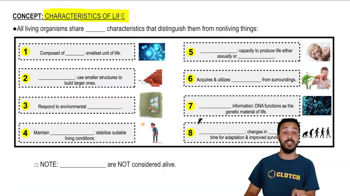
 09:26
09:26