 뒤로
뒤로General Biology: Key Concepts of Life and Cells
 02:09
02:09

이 집합의 용어 (18)
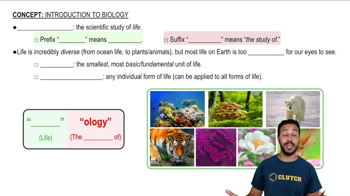
Biology is the scientific study of life and living organisms, focusing on their structure, function, growth, origin, evolution, and distribution.
Life is membrane delimited, composed of cells, stores genetic information, uses energy, self-replicates, responds to environment, and evolves.
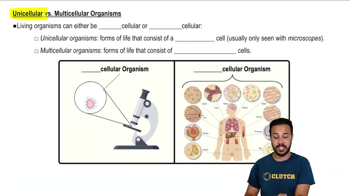
All living organisms are made of cells, the smallest units exhibiting all life properties, even if some cells lack certain features.
Genetic information is stored in DNA and transmitted via various forms of RNA like mRNA, tRNA, and rRNA.
Organisms obtain energy from sunlight (photosynthesis) or organic compounds (cellular respiration) and store it as ATP.
Self-replication is the ability of living things to reproduce by replicating genetic material and dividing cells to continue their species.
Cell membranes, made mainly of lipids, provide a selectively permeable barrier, compartmentalize functions, and maintain homeostasis.
Organisms sense and respond to environmental changes using proteins that act as enzymes, receptors, and structural components.
Evolution is the change in populations over generations through variations in heritable traits, allowing adaptation to environments.
Lipids, Carbohydrates, Nucleic Acids, and Proteins are the main biomolecules supporting life.
Lipids form membranes, store energy, and provide insulation.
Carbohydrates provide energy.
Nucleic acids store and transmit genetic information.
Proteins catalyze reactions, provide structure, and regulate biological processes.
Eukaryotic cells have a nucleus; prokaryotic cells do not.
Viruses can store information, evolve, and respond to environments but lack metabolism and independent replication, so their status as alive is debated.
The scientific method involves observation, hypothesis generation, prediction, experimentation with controls, and revising hypotheses based on results.
A control group allows comparison by lacking the independent variable, helping determine the effect of the variable in experimental groups.