 뒤로
뒤로General Biology Review Exam #1
 02:32
02:32
이 집합의 용어 (48)
Biology is the study of living organisms and their interactions with the environment.
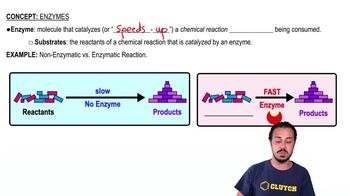
An enzyme is a protein that acts as a biological catalyst to speed up chemical reactions.
Maltose is a sugar (disaccharide), while maltase is the enzyme that breaks down maltose.
Sucrose is a sugar (disaccharide), and sucrase is the enzyme that breaks down sucrose.
Lactose is a sugar found in milk, and lactase is the enzyme that breaks down lactose.
Monomers of carbohydrates are monosaccharides, such as glucose.
Monomers of proteins are amino acids.
Monomers of lipids include glycerol and fatty acids.
Monomers of nucleic acids are nucleotides.
A molecule of glycerol bonded with three fatty acids is called a triglyceride.
Prokaryotic cells belong to the domains Bacteria and Archaea.
The bond holding hydrogen and oxygen in a water molecule is a polar covalent bond.
The four most common elements are carbon, hydrogen, oxygen, and nitrogen.
Kinetic energy is the energy of motion.
A single carbon atom can form a maximum of 4 covalent bonds.
The region of an enzyme where a substrate binds is called the active site.
The kingdom Protista consists primarily of unicellular eukaryotic organisms.
Hydrogen bonds link adjacent water molecules.
The five kingdoms are Monera, Protista, Fungi, Plantae, and Animalia.
Organisms that digest dead organisms are typically in the kingdom Fungi.
Most members of kingdom Plantae perform photosynthesis.
A fatty acid with one or more double bonds is called an unsaturated fatty acid.
Substances that block an enzyme's active site are called enzyme inhibitors.
The reactants are glucose (C6H12O6) and oxygen (O2).
Natural selection requires variation, heritability, and differential survival or reproduction.
A diet high in saturated fats can increase the risk of heart disease.
Steroids are lipids characterized by a carbon skeleton of four fused rings.
The tendency of molecules of the same kind to stick together is called cohesion.
A needle can float due to surface tension caused by water molecule cohesion.
Sweating cools the body by evaporation, which removes heat.
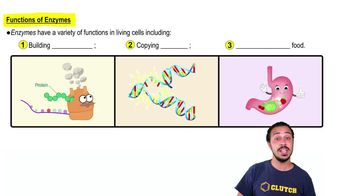
Enzymes are proteins.
Proteins are polymers made from amino acid monomers.
This is the law of conservation of energy.
Animals store carbohydrates as glycogen.
A bond between oppositely charged ions is an ionic bond.
Enzymes increase reaction rate by lowering activation energy.
Bonds involving sharing electrons are called covalent bonds.
An enzyme's function depends on its shape.
Nitrogen has 5 electrons in its outermost shell.
An atom with an electrical charge is an ion.
Starch is an example of a polysaccharide.
The combination of DNA and protein forms chromatin.
The removal of electrons is called oxidation.
Humans are composed of eukaryotic cells.
Isotopes have the same number of protons and different numbers of neutrons.
Radioactive isotopes have unstable nuclei that decay and emit radiation.
ATP (adenosine triphosphate) directly provides energy for cellular work.
The second electron shell can hold a maximum of 8 electrons.