Skip to main content
General Biology
나의 코스
배우기
시험 준비
AI 튜터
학습 가이드
교과서적 해결책
플래시카드
탐험해 보세요
앱을 사용해 보세요
나의 코스
배우기
시험 준비
AI 튜터
학습 가이드
교과서적 해결책
플래시카드
탐험해 보세요
앱을 사용해 보세요
뒤로
Human Evolution and Skull Examination
카드를 뒤집기 위해 탭할 수 있습니다.
What are the four primary types of teeth and their functions?
카드를 뒤집기 위해 탭할 수 있습니다.
👆
What are the four primary types of teeth and their functions?
Incisors
: seizing and biting;
Canines
: gripping and tearing;
Premolars
: crushing and grinding;
Molars
: broad teeth for crushing and grinding.
진행 상황 추적
컨트롤 버튼이 '내비게이션' 모드로 변경되었습니다.
1/20
추천 영상
07:48
Natural Selection Causes Adaptation
13848
views
326
rank
2
comments
02:57
Adaptation Improves Fitness
17021
views
398
rank
1
comments
04:32
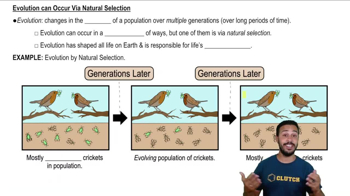
Evolution can Occur Via Natural Selection
11850
views
268
rank
2
comments
이 집합의 용어 (20)
하이드의 정의
What are the four primary types of teeth and their functions?
Incisors
: seizing and biting;
Canines
: gripping and tearing;
Premolars
: crushing and grinding;
Molars
: broad teeth for crushing and grinding.
How do human premolars differ from ape premolars?
Human premolars are
bicuspids
with two cusps, while ape premolars have one cusp used to sharpen canines.
What is a key difference in canine teeth between humans and apes?
Apes have
pronounced, sharp canines
used for display and aggression; humans have
blunt, reduced canines
.
Describe the lower jaw angle difference between humans and other primates.
Humans and apes have a
rounded lower jaw angle
, while other primates have a
sharper angle
.
What are some key skull features of gorillas?
No forehead, large brow ridge, small braincase, prognathous face, large canines, and large zygomatic arch.
What are characteristics of Australopithecus afarensis?
Bipedal, upright stance, some ape-like features, brain size 350-380 cc, about 3 feet tall.
What distinguishes Australopithecus boisei in terms of teeth and skull?
Largest teeth among hominids, elongated face, increased post-canine teeth size, sagittal crest on mid-braincase, brain size 500-550 cc.
List key features of Homo erectus.
Brain size ~900 cc, reduced post-canine teeth, vertical face shortening, sloping forehead, large brow ridges, humanlike limb proportions, barrel-shaped chest, external nose.
What are notable traits of Homo neanderthalensis?
Lived 23,000-30,000 years ago, upright walking, used over 60 tool types, lived in groups, found in Africa, Near East, Europe, Asia.
Describe the skull features of Homo sapiens.
Vertical forehead, small brow ridge, thin skull, large braincase, flattened face, projecting chin, small molars, shallow lower jaw.
How does the human spine differ from ape spine?
Human spine is S-shaped with a slight curve; ape spine exits from rear of skull and has less curvature.
What is the shape difference between human and ape pelvis?
Human pelvis is bowl-shaped; ape pelvis is longer and narrower.
How do human and ape femur angles differ?
Human femur angles inward toward knees; ape femur angles out slightly.
What is the difference in foot arch between humans and apes?
Humans have an arch in the foot; apes have no arch.
What evolutionary trend is seen in brain size from Australopithecus to Homo sapiens?
Brain size increased significantly, from about 400 cc in Australopithecus to over 1300 cc in Homo sapiens.
What is prognathism in primates?
Prognathism is the forward projection of the face, more pronounced in apes than in humans.
What is the function of the zygomatic arch?
It serves as the surface and attachment point for facial muscles used in chewing.
How does the size of front and back teeth differ between apes and humans?
Apes have larger front teeth than back teeth; humans have larger back teeth than front teeth.
What is the significance of the sagittal crest in some hominins?
The sagittal crest is a ridge on the skull for attachment of strong jaw muscles, seen in species like Australopithecus boisei.
What dental formula trend is observed in human evolution?
There is a reduction in post-canine dentition and jaw size over time.
 뒤로
뒤로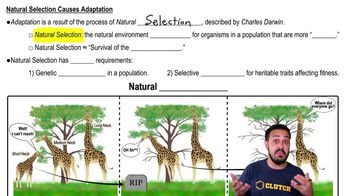
 07:48
07:48