 뒤로
뒤로Unit 2 Chapter 6 - Summer Test
 04:26
04:26
이 집합의 용어 (33)
cell wall
A protective layer external to the plasma membrane in plant cells, bacteria, fungi, and some protists. In plant cells, the wall is formed of cellulose fibers embedded in a polysaccharide-protein matrix. The primary cell wall is thin and flexible, where the secondary cell wall is stronger, more rigid
chloroplasts
An organelle found only in plants and photosynthetic protists that absorbs sunlight and uses it to drive the synthesis of organic compounds from carbon dioxide and water.
chromatin
The complex of DNA and proteins that makes up a eukaryotic chromosome. When the cell is not dividing, chromatin exists as a mass of very long, thin fibers that are not visible with a light microscope.
chromosome
A threadlike, gene-carrying structure found in the nucleus. Each chromosome consists of one very long DNA molecule and associated proteins
cytoplasm
The entire contents of the cell, exclusive of the nucleus, and bounded by the plasma membrane.
cytoskeleton
A network of microtubules, microfilaments, and intermediate filaments that branch throughout the cytoplasm and serve a variety of mechanical and transport functions.
cytosol
The semifluid portion of the cytoplasm.
electron microscope (EM)
A microscope that focuses an electron beam through a specimen, resulting in resolving power a thousandfold greater than that of a light microscope.
endomembrane system
The collection of membranes inside and around a eukaryotic cell, related either through direct physical contact or by the transfer of membranous vesicles.
endoplasmic reticulum (ER)
An extensive membranous network in eukaryotic cells, continuous with the outer nuclear membrane and composed of ribosome-studded (rough) and ribosome-free (smooth) regions.
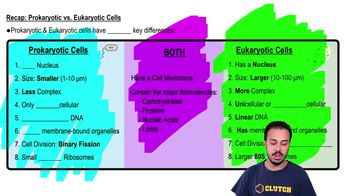
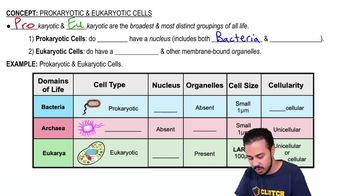
eukaryotic cell
A type of cell with a membrane-enclosed nucleus and membrane-enclosed organelles, present in protists, plants, fungi, and animals; also called eukaryote.
extracellular matrix (ECM)
The substance in which animal tissue cells are embedded, consisting of protein and polysaccharides.
gap junction
A type of intercellular junction in animal cells that allows the passage of material or current between cells.
glycoprotein
A protein covalently attached to a carbohydrate
Golgi apparatus
An organelle in eukaryotic cells consisting of stacks of flat membranous sacs that modify, store, and route products of the endoplasmic reticulum.
Light Microscope (LM)
An optical instrument with lenses that refract (bend) visible light to magnify images of specimens.
lysosomes
A membrane-enclosed sac of hydrolytic enzymes found in the cytoplasm of eukaryotic cells
Mitochondrion
An organelle in eukaryotic cells that serves as the site of cellular respiration
nuclear envelope
The membrane in eukaryotes that encloses the nucleus, separating it from the cytoplasm.
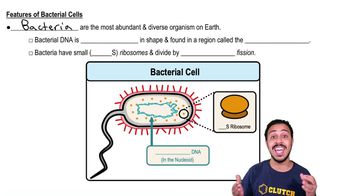
nucleoid
A dense region of DNA in a prokaryotic cell.
nucleolus
A specialized structure in the nucleus, formed from various chromosomes and active in the synthesis of ribosomes
nucleus
1) An atoms central core, containing protons and neutrons.
(2) The chromosome-containing organelle of a eukaryotic cell.
(3) A cluster of neurons.
organelle
One of several formed bodies with specialized functions, suspended in the cytoplasm of eukaryotic cells.
phagocytosis
A type of endocytosis involving large, particulate substances, accomplished mainly by macrophages, neutrophils, and dendritic cells.
plasma membrane
The membrane at the boundary of every cell that acts as a selective barrier, thereby regulating the cells chemical composition
plasmodesma
An open channel in the cell wall of plant through which strands of cytosol connect from an adjacent cell.
prokaryotic cell
A prokaryotic cell lacks a nucleus and membrane-bound organelles, typical of bacteria and archaea.
ribosomes
A cell organelle constructed in the nucleolus and functioning as the site of protein synthesis in the cytoplasm; consists of rRNA and protein molecules, which make up two subunits.
rough ER
That portion of the endoplasmic reticulum studded with ribosomes.
smooth ER
That portion of the endoplasmic reticulum that is free of ribosomes.
transport vesicle
A tiny membranous sac in a cells cytoplasm carrying molecules produced by the cell
vacuole
Membrane-bounded vesicles whose specialized function varies in different kinds of cells.
vesicle
A sac made of membrane inside of cells.