

Ch. 2 - The Chemical Context of Life
Campbell - Campbell Biology 12th Edition
Urry12th EditionCampbell BiologyISBN: 9785794169850당신이 사용하는 게 아니라요?교과서 변경
2장, 문제 9a

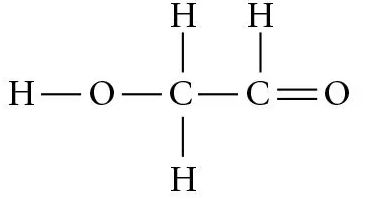
Draw Lewis dot structures for each hypothetical molecule shown below, using the correct number of valence electrons for each atom. Determine which molecule makes sense because each atom has a complete valence shell, and each bond has the correct number of electrons. Explain what makes the other molecule nonsensical, considering the number of bonds each type of atom can make.

검증된 단계별 안내
1
Identify the valence electrons for each atom: Hydrogen (H) has 1 valence electron, Oxygen (O) has 6 valence electrons, and Carbon (C) has 4 valence electrons.
Count the total number of valence electrons in the molecule: There are 3 Hydrogens (3 x 1 = 3), 1 Oxygen (6), and 2 Carbons (2 x 4 = 8). Total = 3 + 6 + 8 = 17 valence electrons.
Draw the Lewis structure by arranging the atoms: Place the central atoms (Carbons) and connect them with single bonds to the surrounding atoms (Hydrogens and Oxygen).
Ensure each atom has a complete valence shell: Hydrogen needs 2 electrons, while Carbon and Oxygen need 8 electrons. Adjust the bonds to satisfy these requirements, using double or triple bonds if necessary.
Evaluate the structure: Check if each atom has the correct number of bonds (Hydrogen forms 1 bond, Carbon forms 4 bonds, and Oxygen typically forms 2 bonds). Identify any discrepancies in the structure that make it nonsensical, such as an incorrect number of bonds or incomplete valence shells.

비슷한 문제에 대한 검증된 영상 답변:

이 영상 해법은 위 문제에 도움이 된다고 튜터들이 추천한 것입니다.
영상 길이:
4m
도움이 되었나요?

주요 개념

질문에 올바르게 답하기 위해 반드시 이해해야 하는 핵심 개념들은 다음과 같습니다.

Lewis Dot Structures

Lewis dot structures are diagrams that represent the valence electrons of atoms within a molecule. Each dot corresponds to a valence electron, and lines between atoms represent covalent bonds formed by shared electron pairs. Understanding how to draw these structures is essential for visualizing molecular geometry and predicting the behavior of molecules in chemical reactions.
추천 영상:
가이드 코스
04:25
Community Structure

Valence Electrons

Valence electrons are the outermost electrons of an atom and are crucial for determining how atoms bond with one another. The number of valence electrons influences an atom's ability to form bonds, with elements typically striving for a complete valence shell, often following the octet rule. This concept is fundamental in assessing the stability and reactivity of molecules.
추천 영상:
가이드 코스
07:41
Electron Transport Chain

Bonding Capacity

Bonding capacity refers to the maximum number of bonds an atom can form based on its valence electrons. For example, carbon can form four bonds, while oxygen typically forms two. Understanding the bonding capacity of different elements is vital for evaluating the feasibility of molecular structures and identifying nonsensical configurations where atoms do not achieve stable electron arrangements.
추천 영상:
가이드 코스
05:03
Hydrogen Bonding