Ch. 28 - Protists
Campbell - Campbell Biology 12th Edition
Urry12th EditionCampbell BiologyISBN: 9785794169850당신이 사용하는 게 아니라요?교과서 변경
28장, 문제 2

Biologists think that endosymbiosis gave rise to mitochondria before plastids partly because
a. The products of photosynthesis could not be metabolized without mitochondrial enzymes.
b. All eukaryotes have mitochondria (or their remnants), whereas many eukaryotes do not have plastids.
c. Mitochondrial DNA is less similar to prokaryotic DNA than is plastid DNA.
d. Without mitochondrial CO2 production, photosynthesis could not occur.

검증된 단계별 안내
1
Understand the concept of endosymbiosis: Endosymbiosis is a theory that explains how eukaryotic cells may have evolved from prokaryotic cells. It suggests that certain organelles, like mitochondria and plastids, originated as free-living bacteria that were engulfed by ancestral eukaryotic cells.
Consider the role of mitochondria and plastids: Mitochondria are involved in cellular respiration, converting oxygen and nutrients into ATP, the energy currency of the cell. Plastids, such as chloroplasts, are involved in photosynthesis, converting light energy into chemical energy stored in glucose.
Evaluate the presence of mitochondria and plastids in eukaryotes: All eukaryotic cells have mitochondria or their remnants, which are essential for energy production. However, not all eukaryotic cells have plastids, as plastids are primarily found in plants and some protists.
Analyze the evolutionary timeline: The presence of mitochondria in all eukaryotes suggests that they were acquired earlier in evolutionary history than plastids. This is because mitochondria are essential for basic cellular functions, whereas plastids are specialized for photosynthesis.
Consider the implications of mitochondrial enzymes: The products of photosynthesis, such as glucose, require mitochondrial enzymes for further metabolism through cellular respiration. This interdependence supports the idea that mitochondria were established before plastids in eukaryotic cells.

비슷한 문제에 대한 검증된 영상 답변:

이 영상 해법은 위 문제에 도움이 된다고 튜터들이 추천한 것입니다.
영상 길이:
55s

주요 개념

질문에 올바르게 답하기 위해 반드시 이해해야 하는 핵심 개념들은 다음과 같습니다.

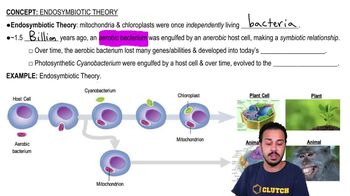
Endosymbiosis Theory

Endosymbiosis is a theory that explains the origin of eukaryotic cells from prokaryotic organisms. It suggests that mitochondria and plastids, such as chloroplasts, originated as free-living bacteria that were engulfed by a host cell. This symbiotic relationship eventually led to the bacteria becoming integral organelles within the eukaryotic cell, providing essential functions like energy production and photosynthesis.
추천 영상:
06:58
Endosymbiotic Theory

Mitochondria and Plastids

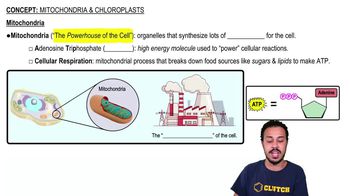
Mitochondria are organelles responsible for producing energy through cellular respiration, while plastids, including chloroplasts, are involved in photosynthesis. The presence of mitochondria in all eukaryotic cells, as opposed to plastids, which are only found in plants and some protists, supports the idea that mitochondria were acquired earlier in evolutionary history. This distinction is crucial for understanding the sequence of endosymbiotic events.
추천 영상:
04:19
Mitochondria

Eukaryotic Diversity

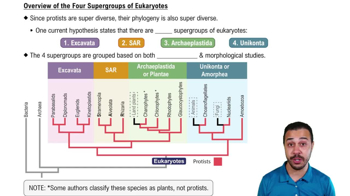
Eukaryotic diversity refers to the wide range of organisms that possess eukaryotic cells, including animals, plants, fungi, and protists. The fact that all eukaryotes have mitochondria, while only some have plastids, suggests that the acquisition of mitochondria was a more fundamental and earlier event in eukaryotic evolution. This helps explain why biologists believe mitochondria appeared before plastids in the evolutionary timeline.
추천 영상:
03:01
Overview of the Four Supergroups of Eukaryotes