Ch. 46 - Animal Reproduction
Campbell - Campbell Biology 12th Edition
Urry12th EditionCampbell BiologyISBN: 9785794169850당신이 사용하는 게 아니라요?교과서 변경
46장, 문제 7

For which of the following is the number the same in human males and females?
a. Interruptions in meiotic divisions
b. Functional gametes produced by meiosis
c. Meiotic divisions required to produce each gamete
d. Different cell types produced by meiosis

검증된 단계별 안내
1
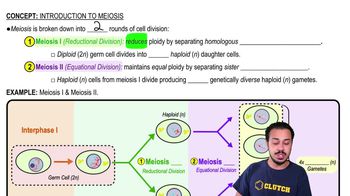
Understand the process of meiosis: Meiosis is a type of cell division that reduces the chromosome number by half, creating four haploid cells, each genetically distinct from the parent cell. It consists of two rounds of division: meiosis I and meiosis II.
Consider the interruptions in meiotic divisions: In human females, meiosis is arrested at two stages (prophase I and metaphase II) until fertilization, whereas in males, meiosis proceeds continuously. Therefore, the number of interruptions is not the same.
Evaluate the functional gametes produced by meiosis: In human males, each meiotic division results in four functional sperm cells, while in females, it results in one functional egg and three polar bodies. Thus, the number of functional gametes is not the same.
Analyze the meiotic divisions required to produce each gamete: Both males and females undergo two meiotic divisions (meiosis I and meiosis II) to produce gametes. Therefore, the number of meiotic divisions required is the same.
Examine the different cell types produced by meiosis: Males produce sperm cells, while females produce egg cells and polar bodies. The types of cells produced are different between the sexes.

비슷한 문제에 대한 검증된 영상 답변:

이 영상 해법은 위 문제에 도움이 된다고 튜터들이 추천한 것입니다.
영상 길이:
1m

주요 개념

질문에 올바르게 답하기 위해 반드시 이해해야 하는 핵심 개념들은 다음과 같습니다.

Meiosis

Meiosis is a type of cell division that reduces the chromosome number by half, resulting in the production of gametes—sperm in males and eggs in females. It consists of two consecutive divisions, meiosis I and meiosis II, and is crucial for sexual reproduction, ensuring genetic diversity and maintaining the chromosome number across generations.
추천 영상:
04:49
Meiosis I & Meiosis II

Gamete Production

In humans, gamete production involves the formation of sperm in males and eggs in females through meiosis. Males produce four functional sperm cells from each meiotic division, while females typically produce one functional egg and polar bodies, which are non-functional. This difference is due to the unequal division of cytoplasm during female meiosis.
추천 영상:
04:36
Primary Production in Aquatic Ecosystems

Meiotic Divisions

Both human males and females undergo two meiotic divisions to produce gametes. However, the number of functional gametes produced differs: males produce four sperm cells per meiotic event, while females produce one egg. The number of meiotic divisions required to produce each gamete is the same, but the outcome in terms of functional gametes differs between sexes.
추천 영상:
03:19
Importance of Cell Division