
Ch. 55 - Ecosystems and Restoration Ecology
Campbell - Campbell Biology 12th Edition
Urry12th EditionCampbell BiologyISBN: 9785794169850당신이 사용하는 게 아니라요?교과서 변경
55장, 문제 7

Which of the following would be considered an example of bioremediation?
a. Adding nitrogen-fixing microorganisms to a degraded ecosystem to increase nitrogen availability
b. Using a bulldozer to regrade a strip mine
c. Reconfiguring the channel of a river
d. Adding seeds of a chromium-accumulating plant to soil contaminated by chromium

검증된 단계별 안내
1
Understand the concept of bioremediation: Bioremediation is the process of using living organisms, such as plants, bacteria, or fungi, to remove or neutralize contaminants from a polluted area.
Evaluate option a: Adding nitrogen-fixing microorganisms to a degraded ecosystem involves using living organisms to improve soil quality by increasing nitrogen availability, which aligns with the concept of bioremediation.
Evaluate option b: Using a bulldozer to regrade a strip mine is a mechanical process and does not involve living organisms, so it does not fit the definition of bioremediation.
Evaluate option c: Reconfiguring the channel of a river is a structural change to the environment and does not involve the use of living organisms to remove contaminants, thus it is not bioremediation.
Evaluate option d: Adding seeds of a chromium-accumulating plant to soil contaminated by chromium involves using plants to absorb and accumulate chromium, which is a direct application of bioremediation.

비슷한 문제에 대한 검증된 영상 답변:

이 영상 해법은 위 문제에 도움이 된다고 튜터들이 추천한 것입니다.
영상 길이:
2m
도움이 되었나요?

주요 개념

질문에 올바르게 답하기 위해 반드시 이해해야 하는 핵심 개념들은 다음과 같습니다.

Bioremediation

Bioremediation is the process of using living organisms, such as microbes or plants, to remove or neutralize contaminants from a polluted area. This environmentally friendly technique leverages natural processes to clean up soil, water, and air, making it a sustainable alternative to traditional methods like chemical treatments or physical removal.

Nitrogen Fixation

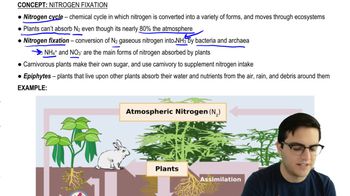
Nitrogen fixation is a biological process where certain microorganisms convert atmospheric nitrogen (N2) into ammonia (NH3), a form that plants can absorb and use for growth. This process is crucial for maintaining soil fertility and is often employed in bioremediation to enhance nutrient availability in degraded ecosystems.
추천 영상:
06:31
Nitrogen Cycle

Phytoremediation

Phytoremediation is a type of bioremediation that involves using plants to absorb, concentrate, and/or detoxify pollutants from soil and water. Certain plants, known as hyperaccumulators, can take up heavy metals like chromium, making them effective for cleaning contaminated sites. This method is cost-effective and environmentally sustainable.