
Ch. 11 - Cell Communication
Campbell - Campbell Biology 11th Edition
Urry11th EditionCampbell BiologyISBN: 9789357423311당신이 사용하는 게 아니라요?교과서 변경
11장, 문제 7a

Protein phosphorylation is commonly involved with all of the following except
a. Activation of receptor tyrosine kinases
b. Activation of protein kinase molecules
c. Activation of G protein-coupled receptors
d. Regulation of transcription by signaling molecules

검증된 단계별 안내
1
Understand the concept of protein phosphorylation: Protein phosphorylation is a biochemical process where a phosphate group is added to a protein by a kinase enzyme. This process often regulates protein activity, signaling pathways, and cellular functions.
Review the role of receptor tyrosine kinases: These receptors are activated through phosphorylation. When a ligand binds to the receptor, it triggers autophosphorylation, which activates the receptor and downstream signaling pathways.
Examine the role of protein kinase molecules: Protein kinases are enzymes that catalyze the phosphorylation of other proteins. This activation is a direct result of phosphorylation, making it a key part of their function.
Analyze the role of G protein-coupled receptors (GPCRs): GPCRs are activated by ligand binding, which causes a conformational change and interaction with G proteins. However, their activation does not directly involve phosphorylation; instead, it relies on GTP binding and hydrolysis.
Consider the regulation of transcription by signaling molecules: Phosphorylation often plays a role in regulating transcription factors or other proteins involved in gene expression. This process is a common mechanism in cellular signaling pathways.

비슷한 문제에 대한 검증된 영상 답변:

이 영상 해법은 위 문제에 도움이 된다고 튜터들이 추천한 것입니다.
영상 길이:
1m

주요 개념

질문에 올바르게 답하기 위해 반드시 이해해야 하는 핵심 개념들은 다음과 같습니다.

Protein Phosphorylation

Protein phosphorylation is a biochemical process that involves the addition of a phosphate group to a protein, typically mediated by enzymes known as kinases. This modification can alter the protein's function, activity, location, or interaction with other molecules, playing a crucial role in cellular signaling and regulation.
추천 영상:
01:06
Types of Phosphorylation

Receptor Tyrosine Kinases (RTKs)

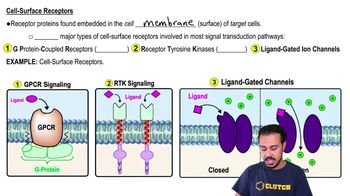
Receptor tyrosine kinases are a class of cell surface receptors that, upon binding to their ligands, undergo autophosphorylation on tyrosine residues. This activation triggers a cascade of downstream signaling pathways that regulate various cellular processes, including growth, differentiation, and metabolism.
추천 영상:
03:16
Cell-Surface Receptors

G Protein-Coupled Receptors (GPCRs)

G protein-coupled receptors are a large family of membrane receptors that respond to a variety of external signals. Upon ligand binding, GPCRs activate intracellular G proteins, which then initiate various signaling pathways. Unlike RTKs, GPCRs do not primarily rely on phosphorylation for their activation, making them distinct in their signaling mechanisms.
추천 영상:
03:16
Cell-Surface Receptors