
Ch. 17 - Gene Expression: From Gene to Protein
Campbell - Campbell Biology 11th Edition
Urry11th EditionCampbell BiologyISBN: 9789357423311당신이 사용하는 게 아니라요?교과서 변경
17장, 문제 5

Which component is not directly involved in translation?
a. GTP
b. DNA
c. tRNA
d. ribosomes

검증된 단계별 안내
1
Understand the process of translation: Translation is the process by which the genetic code carried by mRNA is decoded to produce a specific polypeptide or protein. It occurs in the cytoplasm of the cell and involves several key components.
Identify the components directly involved in translation: The main components involved in translation are mRNA, tRNA, ribosomes, and various enzymes and factors. mRNA provides the template, tRNA brings amino acids, and ribosomes facilitate the assembly of the protein.
Consider the role of GTP: GTP (Guanosine Triphosphate) is an energy source used during translation. It provides the necessary energy for the binding of tRNA to the ribosome and for the movement of the ribosome along the mRNA.
Examine the role of DNA: DNA is the molecule that contains the genetic instructions for the development and function of living organisms. However, DNA is not directly involved in the translation process itself; it is involved in transcription, where mRNA is synthesized.
Conclude which component is not directly involved: Based on the understanding of translation, DNA is not directly involved in the translation process. It is involved in transcription, which precedes translation.

비슷한 문제에 대한 검증된 영상 답변:

이 영상 해법은 위 문제에 도움이 된다고 튜터들이 추천한 것입니다.
영상 길이:
24s

주요 개념

질문에 올바르게 답하기 위해 반드시 이해해야 하는 핵심 개념들은 다음과 같습니다.

Translation Process

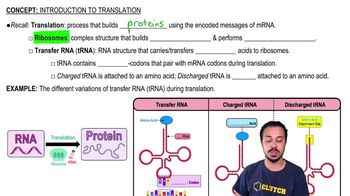
Translation is the process by which ribosomes synthesize proteins using mRNA as a template. It involves decoding the mRNA sequence into a polypeptide chain, with tRNA bringing amino acids to the ribosome and GTP providing energy for the process. Understanding translation is crucial for identifying components directly involved in protein synthesis.
추천 영상:
06:12
Introduction to Translation

Role of DNA in Protein Synthesis

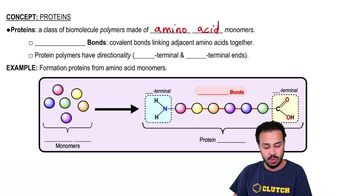
DNA contains the genetic instructions for protein synthesis but is not directly involved in translation. Instead, DNA is transcribed into mRNA in the nucleus, which then travels to the ribosome for translation. Recognizing DNA's indirect role helps clarify why it is not a direct participant in the translation process.
추천 영상:
02:50
Proteins

Function of tRNA and Ribosomes

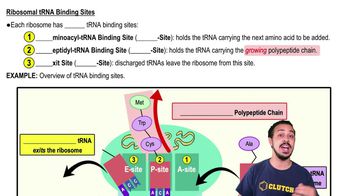
tRNA and ribosomes are essential components of translation. tRNA molecules transport specific amino acids to the ribosome, where ribosomes facilitate the assembly of these amino acids into a polypeptide chain. Their direct involvement in translation highlights their critical roles in protein synthesis.
추천 영상:
06:16
Ribosomal tRNA Binding Sites
관련 실천
교과서 질문

Which of the following mutations would be most likely to have a harmful effect on an organism?

a. A deletion of three nucleotides near the middle of a gene

b. A single nucleotide deletion in the middle of an intron

c. A single nucleotide deletion near the end of the coding sequence

d. A single nucleotide insertion downstream of, and close to, the start of the coding sequence

6106
views
교과서 질문

Using Figure 17.6, identify a 5′→3′ sequence of nucleotides in the DNA template strand for an mRNA coding for the polypeptide sequence Phe-Pro-Lys.


a. 5′-UUUCCCAAA-3′

b. 5′-GAACCCCTT-3′

c. 5′-CTTCGGGAA-3′

d. 5′-AAACCCUUU-3′

3781
views
교과서 질문

Which of the following is not true of RNA processing?

a. Exons are cut out before mRNA leaves the nucleus.

b. Nucleotides may be added at both ends of the RNA.

c. Ribozymes may function in RNA splicing.

d. RNA splicing can be catalyzed by spliceosomes.

2704
views
교과서 질문

Would the coupling of the processes shown in Figure 17.24 be found in a eukaryotic cell? Explain why or why not.

<IMAGE>

775
views
교과서 질문

Which of the following is not true of a codon?

a. It may code for the same amino acid as another codon.

b. It never codes for more than one amino acid.

c. It extends from one end of a tRNA molecule.

d. It is the basic unit of the genetic code.

3112
views
교과서 질문

The anticodon of a particular tRNA molecule is

a. Complementary to the corresponding mRNA codon

b. Complementary to the corresponding triplet in rRNA

c. The part of tRNA that bonds to a specific amino acid

d. Catalytic, making the tRNA a ribozyme

3105
views