Ch. 1 - Biology: The Study of Life
Freeman - Biological Science 8th Edition
Freeman8th EditionBiological ScienceISBN: 9780138276263당신이 사용하는 게 아니라요?교과서 변경
1장, 문제 6

What did Linnaeus' system of naming organisms ensure?
a. Two different organisms never end up with the same genus and species name.
b. Two different organisms have the same genus and species name if they are closely related.
c. The genus name is different for closely related species.
d. The species name is the same for each organism in a genus.

검증된 단계별 안내
1
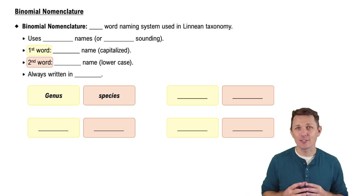
Understand the concept of binomial nomenclature introduced by Carl Linnaeus, which is a formal system of naming species of living things by giving each a name composed of two parts.
The first part of the name is the genus, which is a group of related species. The second part is the specific epithet, which identifies the species within the genus.
Linnaeus' system ensures that each species has a unique combination of genus and species name, preventing confusion between different organisms.
The genus name is shared among species that are closely related, but the species name is unique to each organism within the genus.
Review the options given in the problem and identify which one correctly describes the purpose of Linnaeus' naming system, focusing on the uniqueness of the genus and species combination.

비슷한 문제에 대한 검증된 영상 답변:

이 영상 해법은 위 문제에 도움이 된다고 튜터들이 추천한 것입니다.
영상 길이:
3m

주요 개념

질문에 올바르게 답하기 위해 반드시 이해해야 하는 핵심 개념들은 다음과 같습니다.

Binomial Nomenclature

Binomial nomenclature is a formal system of naming species of living things by giving each a name composed of two parts, both of which use Latin grammatical forms. This system, developed by Carl Linnaeus, ensures that each species has a unique and universally accepted name, consisting of the genus name followed by the species name.
추천 영상:
가이드 코스
02:32
Binomial Nomenclature

Genus and Species

In biological classification, the genus is a rank used in the hierarchical classification of organisms, above species and below family. The species name is the second part of the binomial nomenclature and identifies the specific organism within the genus. This system prevents confusion by ensuring that no two species have the same genus and species name.
추천 영상:
가이드 코스
03:24
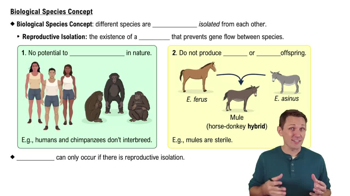
Biological Species Concept

Taxonomic Hierarchy

The taxonomic hierarchy is a system of classification that organizes living organisms into nested groups based on shared characteristics. It includes several ranks such as domain, kingdom, phylum, class, order, family, genus, and species. Linnaeus' system uses this hierarchy to ensure that closely related organisms are grouped under the same genus, while distinct species have unique names.
추천 영상:
09:50
Life's Organizational Hierarchy