Ch. 10 - Photosynthesis
Freeman - Biological Science 8th Edition
Freeman8th EditionBiological ScienceISBN: 9780138276263당신이 사용하는 게 아니라요?교과서 변경
10장, 문제 2

Why is chlorophyll green?
a. It absorbs all wavelengths in the visible spectrum.
b. It absorbs wavelengths only in the red portions of the spectrum (680–700 nm).
c. It absorbs wavelengths only in the blue part of the visible spectrum (450–480 nm).
d. It absorbs wavelengths in only the blue and red parts of the visible spectrum.

검증된 단계별 안내
1
Understand that chlorophyll is a pigment found in plants that plays a crucial role in photosynthesis by absorbing light.
Recognize that the color of a pigment is determined by the wavelengths of light it absorbs and reflects. Chlorophyll appears green because it reflects green light.
Identify the wavelengths of light absorbed by chlorophyll. Chlorophyll primarily absorbs light in the blue (450–480 nm) and red (680–700 nm) parts of the visible spectrum.
Since chlorophyll absorbs blue and red light, it does not absorb green light, which is why it appears green to our eyes.
Conclude that the correct answer is option d, as chlorophyll absorbs wavelengths in only the blue and red parts of the visible spectrum, reflecting green light.

비슷한 문제에 대한 검증된 영상 답변:

이 영상 해법은 위 문제에 도움이 된다고 튜터들이 추천한 것입니다.
영상 길이:
2m
도움이 되었나요?

주요 개념

질문에 올바르게 답하기 위해 반드시 이해해야 하는 핵심 개념들은 다음과 같습니다.

Chlorophyll

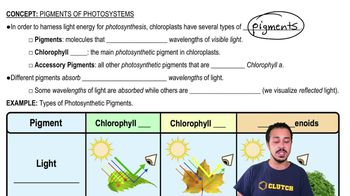
Chlorophyll is a pigment found in plants, algae, and cyanobacteria that plays a crucial role in photosynthesis. It absorbs light primarily in the blue (450–480 nm) and red (680–700 nm) parts of the visible spectrum, which is essential for converting light energy into chemical energy. The green color of chlorophyll is due to its inability to absorb green wavelengths, which are reflected instead.
추천 영상:
05:58
Pigments of Photosynthesis

Visible Spectrum

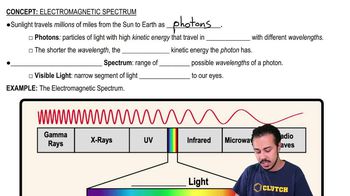
The visible spectrum is the portion of the electromagnetic spectrum that is visible to the human eye, ranging from approximately 380 nm to 750 nm. It includes all the colors perceived by humans, from violet to red. Understanding which wavelengths chlorophyll absorbs helps explain why it appears green, as it reflects the green wavelengths while absorbing others.
추천 영상:
04:29
Electromagnetic Spectrum

Light Absorption and Reflection

Light absorption occurs when a substance takes in light energy, while reflection is when light bounces off a surface. Chlorophyll absorbs light in the blue and red regions of the spectrum, which is used in photosynthesis, and reflects green light, making plants appear green. This selective absorption and reflection are key to understanding the color of chlorophyll.
추천 영상:
15:15
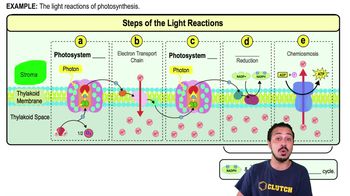
Steps of the Light Reactions