
Ch. 11 - Cell-Cell Interactions
Freeman - Biological Science 8th Edition
Freeman8th EditionBiological ScienceISBN: 9780138276263당신이 사용하는 게 아니라요?교과서 변경
11장, 문제 9b

Steroid hormones, like most lipid-soluble signaling molecules, are processed directly. How does the absence of a signal transduction cascade in the processing of steroid hormones affect (b) signal regulation?

검증된 단계별 안내
1
Understand that steroid hormones are lipid-soluble, allowing them to pass through cell membranes easily and bind directly to intracellular receptors.
Recognize that the absence of a signal transduction cascade means that steroid hormones do not require a series of intermediary steps to relay their signal inside the cell.
Consider how direct binding to receptors affects signal regulation: the response is typically more straightforward and less modulated by other cellular components compared to pathways involving multiple steps.
Reflect on the implications of this direct action: the signal is less subject to amplification or attenuation, which can occur in multi-step cascades, leading to a more consistent and sustained response.
Conclude that while the direct pathway allows for rapid and specific responses, it may limit the cell's ability to finely tune the signal compared to more complex pathways with multiple regulatory points.

비슷한 문제에 대한 검증된 영상 답변:

이 영상 해법은 위 문제에 도움이 된다고 튜터들이 추천한 것입니다.
영상 길이:
3m
도움이 되었나요?

주요 개념

질문에 올바르게 답하기 위해 반드시 이해해야 하는 핵심 개념들은 다음과 같습니다.

Steroid Hormones

Steroid hormones are lipid-soluble molecules derived from cholesterol, which can easily pass through cell membranes. Unlike peptide hormones, they do not require surface receptors and can directly interact with intracellular receptors, influencing gene expression and cellular function. This direct interaction allows for rapid and specific responses within target cells.
추천 영상:
가이드 코스
08:18
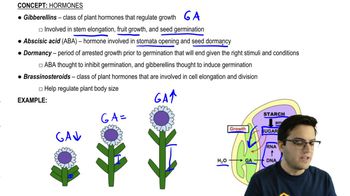
Plant Hormones and Senescence

Signal Transduction Cascade

A signal transduction cascade is a series of molecular events initiated by the binding of a signaling molecule to a receptor, often involving multiple steps and amplification of the signal. This process typically involves secondary messengers and protein modifications, allowing for complex regulation and integration of signals, which can modulate cellular responses in a controlled manner.
추천 영상:
가이드 코스
02:35
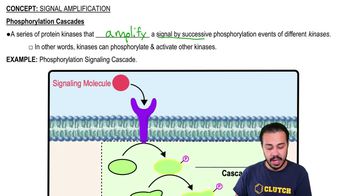
Phosphorylation Cascades

Signal Regulation

Signal regulation refers to the mechanisms that control the intensity, duration, and specificity of a cellular response to a signaling molecule. In the absence of a signal transduction cascade, as seen with steroid hormones, regulation is primarily achieved through receptor availability, hormone concentration, and direct gene expression changes, leading to a more straightforward but less modulated response compared to cascades.
추천 영상:
가이드 코스
06:10
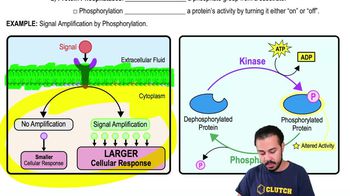
Signal Amplification