Ch. 12 - The Cell Cycle
Freeman - Biological Science 8th Edition
Freeman8th EditionBiological ScienceISBN: 9780138276263당신이 사용하는 게 아니라요?교과서 변경
12장, 문제 10

When a fruit fly embryo first begins to develop, a large cell is generated that contains over 8000 genetically identical nuclei. What is most likely responsible for this result?

검증된 단계별 안내
1
Understand the context: The problem describes the early development of a fruit fly embryo, where a single large cell contains over 8000 genetically identical nuclei. This suggests rapid nuclear division without cell division, a process known as syncytial division.
Recall the concept of mitosis: Mitosis is the process by which a cell divides its nucleus to produce two genetically identical nuclei. In this case, mitosis occurs repeatedly without cytokinesis (the physical division of the cell).
Identify the mechanism: Syncytial division involves multiple rounds of nuclear division within a shared cytoplasm. This allows the nuclei to remain genetically identical because they are derived from the same original nucleus through mitosis.
Consider the role of the cell cycle: During syncytial division, the cell cycle progresses through the stages of mitosis (prophase, metaphase, anaphase, and telophase) but skips cytokinesis, resulting in a single cell with many nuclei.
Relate this to embryonic development: In fruit fly embryos, syncytial division is an efficient way to rapidly produce many nuclei, which later become partitioned into individual cells during cellularization, supporting the development of the organism.

비슷한 문제에 대한 검증된 영상 답변:

이 영상 해법은 위 문제에 도움이 된다고 튜터들이 추천한 것입니다.
영상 길이:
1m
도움이 되었나요?

주요 개념

질문에 올바르게 답하기 위해 반드시 이해해야 하는 핵심 개념들은 다음과 같습니다.

Nuclear Division

Nuclear division, specifically mitosis, is the process by which a cell divides its nucleus and genetic material. In the case of the fruit fly embryo, multiple rounds of mitosis occur without cytokinesis, leading to a syncytium—a single cell with multiple nuclei. This allows for rapid cell division and the formation of a large cell containing genetically identical nuclei.
추천 영상:
가이드 코스
03:19
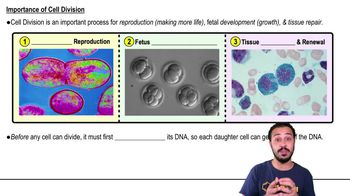
Importance of Cell Division

Syncytium Formation

Syncytium formation occurs when multiple nuclei share a common cytoplasm without the separation of the cell membrane. In fruit fly embryos, this process is crucial during early development, as it enables the rapid accumulation of nuclei in a single cell, facilitating efficient resource allocation and developmental signaling before individual cell membranes form.
추천 영상:
가이드 코스
03:08
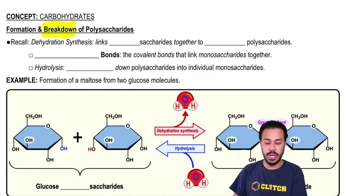
Formation & Breakdown of Polysaccharides

Genetic Identity in Embryonic Development

During early embryonic development, cells often undergo divisions that maintain genetic identity, meaning that all nuclei produced are genetically identical to the original zygote. This genetic uniformity is essential for coordinated development, as it ensures that all cells in the syncytium share the same genetic instructions, which is vital for proper embryonic patterning and differentiation later in development.
추천 영상:
가이드 코스
06:02
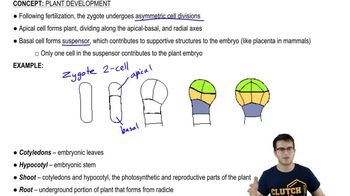
Embryonic Plant Development