
Ch. 19 - Control of Gene Expression in Eukaryotes
Freeman - Biological Science 8th Edition
Freeman8th EditionBiological ScienceISBN: 9780138276263당신이 사용하는 게 아니라요?교과서 변경
19장, 문제 5a

Compare and contrast the items in each pair:
(a) enhancers and the E. coli CAP binding site

검증된 단계별 안내
1
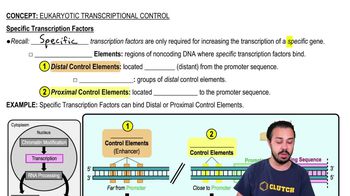
Understand the role of enhancers in eukaryotic cells: Enhancers are DNA sequences that can increase the transcription of genes. They are located at varying distances from the gene they regulate and can be upstream, downstream, or even within introns. Enhancers function by binding transcription factors, which then interact with the promoter region to enhance gene expression.
Explore the function of the CAP binding site in E. coli: The CAP (catabolite activator protein) binding site is a specific DNA sequence in prokaryotic cells, particularly in E. coli, that is involved in the regulation of gene expression. CAP binds to this site when glucose levels are low, facilitating the binding of RNA polymerase to the promoter and increasing transcription of genes involved in the metabolism of alternative sugars.
Compare the mechanisms of action: Both enhancers and the CAP binding site function by interacting with proteins that influence transcription. Enhancers bind various transcription factors, while the CAP binding site specifically binds the CAP protein. Both mechanisms ultimately lead to increased transcription, but they operate in different cellular contexts (eukaryotic vs. prokaryotic).
Contrast the location and flexibility: Enhancers can be located far from the gene they regulate and can act in a flexible manner, influencing multiple genes. In contrast, the CAP binding site is typically located close to the promoter of the gene it regulates and has a more direct and specific role in gene expression.
Discuss the evolutionary context: Enhancers are a feature of eukaryotic gene regulation, allowing complex control over gene expression necessary for multicellular organisms. The CAP binding site is part of the simpler regulatory mechanisms found in prokaryotes, reflecting the different needs and evolutionary pressures faced by single-celled organisms like E. coli.

비슷한 문제에 대한 검증된 영상 답변:

이 영상 해법은 위 문제에 도움이 된다고 튜터들이 추천한 것입니다.
영상 길이:
41s
도움이 되었나요?

주요 개념

질문에 올바르게 답하기 위해 반드시 이해해야 하는 핵심 개념들은 다음과 같습니다.

Enhancers

Enhancers are DNA sequences that can significantly increase the transcription of genes. They function by binding transcription factors, which then interact with the promoter region of a gene, even if the enhancer is located far from the gene itself. Enhancers are crucial for regulating gene expression in eukaryotic cells.
추천 영상:
03:57
Specific Transcription Factors

E. coli CAP Binding Site

The CAP binding site in E. coli is a specific DNA sequence where the catabolite activator protein (CAP) binds. This binding is essential for the regulation of gene expression in response to glucose levels. When glucose is scarce, CAP binds to the site, facilitating RNA polymerase attachment to the promoter and enhancing transcription of genes involved in lactose metabolism.
추천 영상:
06:16
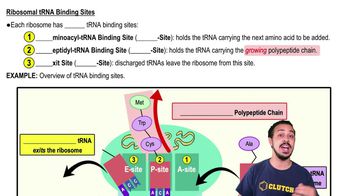
Ribosomal tRNA Binding Sites

Gene Regulation Mechanisms

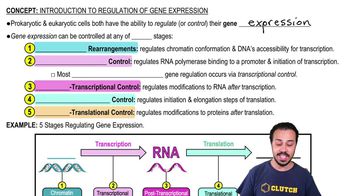
Gene regulation involves various mechanisms that control the expression of genes, ensuring that proteins are produced at the right time and in appropriate amounts. Enhancers and CAP binding sites are examples of regulatory elements that modulate transcription. While enhancers are common in eukaryotes, CAP binding sites are specific to prokaryotic organisms like E. coli, highlighting differences in regulatory strategies across domains of life.
추천 영상:
06:40
Introduction to Regulation of Gene Expression