
Ch. 20 - The Molecular Revolution: Biotechnology, Genomics, and New Frontiers
Freeman - Biological Science 8th Edition
Freeman8th EditionBiological ScienceISBN: 9780138276263당신이 사용하는 게 아니라요?교과서 변경
20장, 문제 10

One hypothesis for differences between humans and chimpanzees involves differences in gene regulation. A study using RNA-seq showed that the overall patterns of gene expression were similar in the liver and blood of the two species, but the expression patterns were strikingly different in the brain. How do these results relate to the hypothesis?

검증된 단계별 안내
1
Begin by understanding the hypothesis: It suggests that differences between humans and chimpanzees may be due to differences in gene regulation, particularly in how genes are expressed in different tissues.
Consider the study's findings: RNA-seq analysis showed similar gene expression patterns in the liver and blood of both species, indicating that gene regulation in these tissues might be conserved between humans and chimpanzees.
Focus on the brain: The study found striking differences in gene expression patterns in the brain between humans and chimpanzees. This suggests that gene regulation in the brain is a key area where differences between the two species may arise.
Relate the findings to the hypothesis: The differences in brain gene expression support the hypothesis that gene regulation, particularly in the brain, could be a significant factor in the evolutionary divergence between humans and chimpanzees.
Conclude by considering the implications: These results imply that changes in gene regulation in the brain may contribute to the unique cognitive and neurological traits observed in humans compared to chimpanzees.

비슷한 문제에 대한 검증된 영상 답변:

이 영상 해법은 위 문제에 도움이 된다고 튜터들이 추천한 것입니다.
영상 길이:
1m
도움이 되었나요?

주요 개념

질문에 올바르게 답하기 위해 반드시 이해해야 하는 핵심 개념들은 다음과 같습니다.

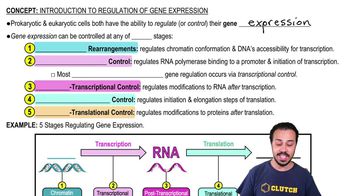
Gene Regulation

Gene regulation refers to the mechanisms that control the expression of genes, determining when, where, and how much a gene is expressed. This process is crucial for cellular differentiation and function, allowing organisms to adapt to changes in their environment. Differences in gene regulation can lead to significant phenotypic variations between species, even if they share a large percentage of their DNA.
추천 영상:
가이드 코스
06:40
Introduction to Regulation of Gene Expression

RNA-seq

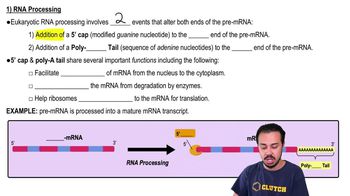
RNA sequencing (RNA-seq) is a powerful technique used to analyze the transcriptome, the complete set of RNA transcripts produced by the genome under specific circumstances. It provides insights into gene expression patterns, revealing which genes are active, to what extent, and how they differ between tissues or species. This method is essential for understanding the regulatory differences that may contribute to phenotypic diversity.
추천 영상:
가이드 코스
04:19
1) RNA Processing

Brain Gene Expression

Gene expression in the brain is highly complex and tightly regulated, reflecting the organ's intricate functions and adaptability. Differences in brain gene expression between species, such as humans and chimpanzees, can lead to significant cognitive and behavioral distinctions. The study's finding of divergent expression patterns in the brain supports the hypothesis that regulatory changes, rather than genetic sequence differences, may underlie key evolutionary differences.
추천 영상:
가이드 코스
06:40
Introduction to Regulation of Gene Expression
관련 실천
교과서 질문

Revolutionaries executed Nicholas II, the last czar of Russia, along with his wife and five children, the family physician, and about a dozen servants. Many decades later, a grave said to hold the remains of the royal family was discovered. Biologists were asked to analyze DNA from the bodies. If the remains of the family were in this grave, predict how similar the DNA fingerprints would be between the parents, the children, and the unrelated individuals in the grave.

650
views
교과서 질문

Potato blight causes potato plants to shrivel and rot. The disease is caused by the pathogen Phytophthora infestans, infamous for its role in Ireland's Great Potato Famine in the mid-1840s. The disease can devastate crops during wet weather, sometimes leading to total crop loss. Researchers aim to use recombinant DNA methods to transfer blight resistance genes from resistant varieties into susceptible varieties of potato. Transgenic plants usually contain genes of bacterial plasmid origin. In a recent study, researchers designed a strategy that avoided using any plasmid genes. They transformed cells from a susceptible potato variety with a potato blight resistance gene cloned from a resistant variety. Next, to determine which plants from this group were also free of plasmid DNA (cloning vector) sequences, they performed PCR using primers specific for the plasmid. The positive control lane shows PCR amplification of plasmid DNA only, and the negative control lane shows an attempted PCR amplification of no added DNA. Based on the gel analysis of PCR products shown below, which plants contain only the potato gene? Explain your answer.

628
views
교과서 질문

If the sequence of DNA in Question 12 were amplified using 25 PCR cycles, then the amount of this DNA would be predicted to increase by          -fold.

905
views
교과서 질문

Gene density is the number of genes per million base pairs (Mbp). Using Figure 20.5b, find the approximate number of genes estimated in water fleas and in humans, and note the size of each genome. Calculate the gene density in water fleas relative to that in humans.

1637
views
교과서 질문

A friend who works in a research lab performed a GWAS and discovered a tight association between a SNP allele and the disease she is studying. She concluded that the SNP allele must be the mutation that causes the disease. Explain why she is likely to be wrong.

536
views
교과서 질문

Potato blight causes potato plants to shrivel and rot. The disease is caused by the pathogen Phytophthora infestans, infamous for its role in Ireland's Great Potato Famine in the mid-1840s. The disease can devastate crops during wet weather, sometimes leading to total crop loss. Researchers aim to use recombinant DNA methods to transfer blight resistance genes from resistant varieties into susceptible varieties of potato. Explain how restriction endonucleases and DNA ligase could be used to insert a potato blight resistance gene into a plasmid.

683
views