Ch. 22 - Evolution by Natural Selection
Freeman - Biological Science 8th Edition
Freeman8th EditionBiological ScienceISBN: 9780138276263당신이 사용하는 게 아니라요?교과서 변경
22장, 문제 3

Traits that are derived from a common ancestor, like the bones of human arms and bird wings, are said to be               .

검증된 단계별 안내
1
Step 1: Understand the question. The question is asking for a term that describes traits that are derived from a common ancestor. In this case, the example given is the bones of human arms and bird wings.
Step 2: Recall your knowledge about evolution and common ancestry. In biology, traits that are shared by different species due to common ancestry are referred to as homologous traits.
Step 3: Apply this knowledge to the question. The bones of human arms and bird wings are similar because they are derived from a common ancestor. Therefore, they are homologous traits.
Step 4: Formulate the answer. The term that describes traits that are derived from a common ancestor is 'homologous'.
Step 5: Review the answer. Make sure the term 'homologous' accurately describes traits that are derived from a common ancestor, like the bones of human arms and bird wings.

비슷한 문제에 대한 검증된 영상 답변:

이 영상 해법은 위 문제에 도움이 된다고 튜터들이 추천한 것입니다.
영상 길이:
3m
도움이 되었나요?

주요 개념

질문에 올바르게 답하기 위해 반드시 이해해야 하는 핵심 개념들은 다음과 같습니다.

Homologous Structures

Homologous structures are anatomical features in different species that share a common ancestry, even if their functions differ. For example, the forelimbs of humans, whales, and birds have similar bone structures, indicating they evolved from a common ancestor, despite serving different purposes in each species.
추천 영상:
08:09
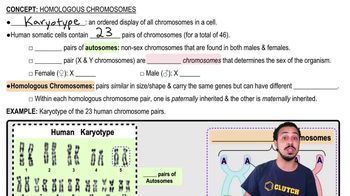
Homologous Chromosomes

Evolutionary Biology

Evolutionary biology is the study of the processes that drive the diversity of life on Earth, including natural selection, genetic drift, and speciation. Understanding these processes helps explain how homologous structures arise and adapt over time, reflecting the shared ancestry of different organisms.
추천 영상:
가이드 코스
02:45
History of Evolutionary Theory Example 1

Comparative Anatomy

Comparative anatomy is the branch of biology that compares the anatomical structures of different organisms to understand evolutionary relationships. By examining homologous structures, scientists can infer how species are related and how they have adapted to their environments over time.
추천 영상:
08:18
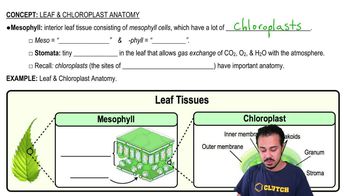
Leaf & Chloroplast Anatomy
관련 실천
교과서 질문

Some biologists summarize evolution by natural selection with the phrase "mutation proposes, selection disposes." Mutation is a process that creates heritable variation. Explain what the phrase means.

897
views

교과서 질문

Why does the presence of extinct forms and transitional features in the fossil record support the pattern component of the theory of evolution by natural selection? Select True or False for each statement.

T/F It supports the hypothesis that individuals change over time.

T/F It supports the hypothesis that weaker species are eliminated by natural selection.

T/F It supports the hypothesis that species evolve to become more complex and better adapted over time.

T/F It supports the hypothesis that species change over time.

702
views
교과서 질문

How can evolutionary fitness be measured? Select True or False for each statement.

T/F Document how long individuals survive.

T/F Count the number of healthy, fertile offspring produced.

T/F Determine which individuals are strongest.

T/F Determine which phenotype is the most common.

1258
views
교과서 질문

According to data presented in this chapter, which of the following are correct? Select True or False for each statement. T/F When individuals change in response to challenges from the environment, their altered traits are passed on to offspring. T/F Species are created independently of each other and do not change over time. T/F Populations—not individuals—change when natural selection occurs. T/F The traits of populations become more perfect over time.

696
views
교과서 질문

True or false? Some traits are considered vestigial because they existed long ago.

1188
views