Ch. 24 - Speciation
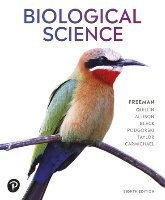
Freeman - Biological Science 8th Edition
Freeman8th EditionBiological ScienceISBN: 9780138276263당신이 사용하는 게 아니라요?교과서 변경
24장, 문제 15

In a follow-up study in 2020, Joshua Akey and colleagues discovered that the genomes of modern Africans contain a small amount of Neanderthal DNA due to migration of some Europeans back to Africa after interbreeding with Neanderthals. Given the large amount of variation within human populations, how would you know whether there is a significant difference in percentage of Neanderthal DNA between modern Europeans and modern Africans?

검증된 단계별 안내
1
Formulate a hypothesis: Determine if there is a significant difference in the percentage of Neanderthal genes between students with blue eyes and those with brown eyes. The null hypothesis (H0) could be that there is no difference, while the alternative hypothesis (H1) could be that there is a difference.
Collect data: Sequence the DNA of students with blue eyes and those with brown eyes to determine the percentage of Neanderthal genes in each individual's genome.
Organize the data: Group the data into two categories based on eye color (blue and brown) and calculate the mean percentage of Neanderthal genes for each group.
Perform a statistical test: Use an appropriate statistical test, such as a t-test, to compare the means of the two groups. This will help determine if any observed difference is statistically significant.
Interpret the results: Analyze the p-value obtained from the statistical test. If the p-value is less than the chosen significance level (commonly 0.05), reject the null hypothesis and conclude that there is a significant difference in the percentage of Neanderthal genes between the two groups.

비슷한 문제에 대한 검증된 영상 답변:

이 영상 해법은 위 문제에 도움이 된다고 튜터들이 추천한 것입니다.
영상 길이:
3m
도움이 되었나요?

주요 개념

질문에 올바르게 답하기 위해 반드시 이해해야 하는 핵심 개념들은 다음과 같습니다.

Neanderthal DNA in Modern Humans

Neanderthal DNA refers to the genetic material inherited from Neanderthals, an extinct species closely related to modern humans. After interbreeding events between Neanderthals and early Homo sapiens, some Neanderthal genes were integrated into the human genome. Today, non-African populations typically have about 1-4% Neanderthal DNA, which can influence various traits and susceptibilities.
추천 영상:
02:58
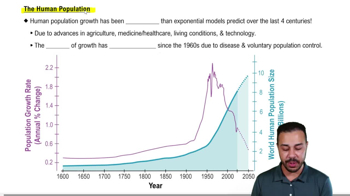
The Human Population

Genetic Variation and Eye Color

Eye color is a polygenic trait primarily determined by the interaction of multiple genes, with the OCA2 and HERC2 genes playing significant roles. Variations in these genes can lead to different eye colors, such as blue or brown. Understanding genetic variation is crucial for studying how certain traits, like eye color, might correlate with other genetic factors, such as Neanderthal DNA.
추천 영상:
가이드 코스
02:16
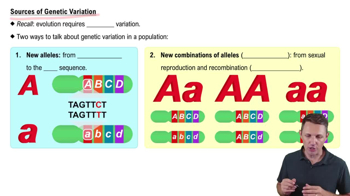
Sources of Genetic Variation

Statistical Significance in Genetic Studies

Statistical significance is a measure used to determine if the observed differences in data are likely due to chance or represent a true effect. In genetic studies, statistical tests, such as t-tests or ANOVA, can be used to compare the percentage of Neanderthal DNA between groups (e.g., blue-eyed vs. brown-eyed students) to assess if any observed differences are significant, considering sample size and variability.
추천 영상:
05:01
Levels of Ecological Study