
Ch. 29 - Fungi
Freeman - Biological Science 8th Edition
Freeman8th EditionBiological ScienceISBN: 9780138276263당신이 사용하는 게 아니라요?교과서 변경
29장, 문제 6

Explain why fungi that degrade dead plant materials are important to the global carbon cycle. Do you accept the text's statement that, without these fungi, 'Terrestrial environments would be radically different than they are today, and probably much less productive'? Why or why not?

검증된 단계별 안내
1
Step 1: Understand the role of fungi in the ecosystem. Fungi are decomposers, meaning they break down dead organic material. This includes plant materials such as leaves, wood, and other plant debris.
Step 2: Understand the carbon cycle. The carbon cycle is the process by which carbon is exchanged between the biosphere, geosphere, hydrosphere, and atmosphere of the Earth. When fungi decompose plant material, they release carbon dioxide back into the atmosphere, contributing to the carbon cycle.
Step 3: Consider the impact of fungi on terrestrial environments. Without fungi to break down dead plant material, this organic matter would accumulate, potentially leading to changes in soil composition and structure. This could impact plant growth and productivity.
Step 4: Evaluate the statement in the text. Given the role of fungi in decomposition and the carbon cycle, it is reasonable to agree with the text's statement that without these fungi, terrestrial environments would be radically different and probably much less productive.
Step 5: Formulate your own opinion. While the text's statement is supported by our understanding of biology and ecology, it's important to consider other factors that could influence terrestrial productivity, such as other decomposers, climate, and human activity.

비슷한 문제에 대한 검증된 영상 답변:

이 영상 해법은 위 문제에 도움이 된다고 튜터들이 추천한 것입니다.
영상 길이:
33s

주요 개념

질문에 올바르게 답하기 위해 반드시 이해해야 하는 핵심 개념들은 다음과 같습니다.

Decomposition

Decomposition is the biological process through which organic matter, such as dead plants and animals, is broken down into simpler substances. Fungi play a crucial role in this process by breaking down complex organic materials, releasing nutrients back into the soil and contributing to the formation of humus. This not only recycles nutrients but also supports plant growth, making ecosystems more productive.
추천 영상:
01:57
Introduction to Ecosystems Example 2

Carbon Cycle

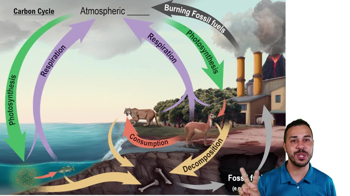
The carbon cycle is the process by which carbon is exchanged among the atmosphere, land, water, and living organisms. Fungi contribute to this cycle by decomposing organic matter, which releases carbon dioxide back into the atmosphere and sequesters carbon in the soil. This cycling of carbon is essential for maintaining the balance of ecosystems and mitigating climate change.
추천 영상:
04:20
Carbon Cycle

Ecosystem Productivity

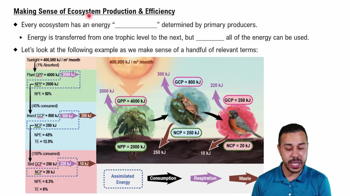
Ecosystem productivity refers to the rate at which energy is converted by photosynthetic and chemosynthetic autotrophs to organic substances. Fungi that decompose dead plant materials enhance soil fertility and nutrient availability, which in turn supports higher plant productivity. Without these fungi, terrestrial ecosystems would likely experience reduced nutrient cycling, leading to lower productivity and biodiversity.
추천 영상:
07:47
Making Sense of Ecosystem Production & Efficiency
관련 실천
교과서 질문

What does it mean to say that a hypha is dikaryotic?

a. Two nuclei fuse during sexual reproduction to form a zygote.

b. Two independent nuclei, derived from different individuals, are present in each cell.

c. The nucleus is diploid or polyploid — not haploid.

d. It is extremely highly branched, which increases its surface area and thus absorptive capacity.

762
views
교과서 질문

Evaluate each of the following defects. Which could lead to uncontrolled growth in cancer? Select True or False for each statement. T/FThe overexpression of MPF activity. T/FA nonfunctional Rb protein. T/FThe overexpression of G1 cyclin. T/FA nonfunctional E2F protein.

2262
views
교과서 질문

The hyphae of arbuscular mycorrhizal fungi (AMF) form bushy structures after making contact with the plasma membrane of a root cell. What is the function of these structures?

a. They anchor the fungus inside the root, so the association is more permanent.

b. They increase the surface area available for the transfer of nutrients.

c. They produce toxins that protect the plant cells against herbivores.

d. They break down cellulose and lignin in the plant cell wall.

1029
views
교과서 질문

The Greek root ecto means 'outer.' Why are ectomycorrhizal fungi, or EMF, aptly named?

a. Their hyphae form tree-like branching structures inside plant cell walls.

b. They are mutualistic.

c. Their hyphae form dense mats that envelop roots but do not penetrate the cell walls.

d. They transfer nitrogen from outside their plant hosts to the interior.

830
views
교과서 질문

Lignin and cellulose provide rigidity to the cell walls of plants. But in most fungi, chitin performs this role. Why is it logical that most fungi don't have lignin or cellulose in their cell walls?

1271
views
교과서 질문

Lawns are sometimes fertilized with nitrate that can be washed into neighboring woodlots by rain. If the trees in that woodlot are associated with EMF, what effect might the excess nitrate have on the fungi and/or trees?

a. Fungal growth may be stimulated, causing the trees to transport more nitrogen to the fungi.

b. The fungi may secrete more peptidases to break down the nitrate.

c. The trees may take up the nitrate directly into their roots and rely less on the fungi.

d. The excess nitrate may stimulate the fungi to transport more sugar to the trees.

593
views