Ch. 29 - Fungi
Freeman - Biological Science 8th Edition
Freeman8th EditionBiological ScienceISBN: 9780138276263당신이 사용하는 게 아니라요?교과서 변경
29장, 문제 9

Table 29.1 mentions that chytrids are responsible for massive die-offs currently occurring in amphibians. Review Koch's postulates; then design a study showing how you would use Koch's postulates to test the hypothesis that chytrid infections are responsible for frog deaths.

검증된 단계별 안내
1
Formulate the hypothesis: Chytrid infections are responsible for frog deaths.
Isolate the suspected pathogen: Collect samples from infected frogs and isolate the chytrid fungus (Batrachochytrium dendrobatidis).
Grow the pathogen in pure culture: Culture the isolated chytrid fungus in a controlled laboratory environment.
Inoculate healthy frogs: Introduce the cultured chytrid fungus to healthy frogs and observe if they develop the same symptoms and die-offs.
Re-isolate the pathogen: After the inoculated frogs show symptoms or die, re-isolate the chytrid fungus from these frogs to confirm it is the same pathogen initially isolated.

비슷한 문제에 대한 검증된 영상 답변:

이 영상 해법은 위 문제에 도움이 된다고 튜터들이 추천한 것입니다.
영상 길이:
36s
도움이 되었나요?

주요 개념

질문에 올바르게 답하기 위해 반드시 이해해야 하는 핵심 개념들은 다음과 같습니다.

Koch's Postulates

Koch's postulates are a set of criteria established to determine whether a specific microorganism causes a particular disease. They include: the microorganism must be found in abundance in diseased organisms but not in healthy ones; it must be isolated and cultured; it should cause disease when introduced to a healthy organism; and it must be re-isolated from the experimentally infected host. These postulates are fundamental in microbiology for establishing causative relationships between pathogens and diseases.
추천 영상:
가이드 코스
04:12
Natural Selection: Observations and Inferences

Chytrid Fungi

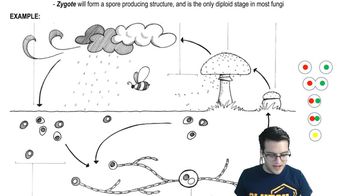
Chytrids are a group of fungi known for their aquatic habitats and unique reproductive structures, including motile spores and gametes. They play significant ecological roles, such as decomposing organic matter and forming mutualistic relationships with various organisms. However, certain chytrid species, like Batrachochytrium dendrobatidis, are pathogenic to amphibians, leading to severe population declines and contributing to the global amphibian crisis.
추천 영상:
09:27
Fungi Reproduction - 1

Amphibian Decline

The decline of amphibian populations is a significant ecological concern, attributed to various factors including habitat loss, climate change, pollution, and infectious diseases. Chytridiomycosis, caused by chytrid fungi, has been identified as a major driver of these declines, leading to mass die-offs in frog populations worldwide. Understanding the interactions between pathogens and host species is crucial for conservation efforts aimed at protecting amphibian biodiversity.
추천 영상:
05:57
Tetrapods
관련 실천
교과서 질문

Many mushrooms are extremely colorful. One hypothesis is that the colors serve as a warning to prevent animals from eating mushrooms, much like the bright yellow and black stripes on wasps help to deter potential predators. Design an experiment to test this hypothesis.

692
views
교과서 질문

Evaluate each of the following defects. Which could lead to uncontrolled growth in cancer? Select True or False for each statement. T/FThe overexpression of MPF activity. T/FA nonfunctional Rb protein. T/FThe overexpression of G1 cyclin. T/FA nonfunctional E2F protein.

2217
views
교과서 질문

Some fungi have elaborate mechanisms for dispersing spores. For example, the 'squirt gun' fungus Pilobolus, which grows in cow dung, forcibly shoots off tiny black sporangia filled with spores. Any sporangia that are flung onto fresh grass are likely to be eaten by a grazing cow, passed through its digestive system unharmed, and deposited in a new batch of dung. The spores carried within the sporangia are perfectly positioned to grow into a new mycelium.

Pilobolus is a zygomycete, and the sporangia just described produce asexual spores. In contrast, which of the following best describes what happens during the sexual phase of its life cycle?

a. It produces eight ascospores in each ascus.

b. It produces basidiospores that grow into mushrooms.

c. It produces motile sperm and eggs.

d. Hyphae from two compatible mating types fuse and form a zygosporangium.

957
views
교과서 질문

Some fungi have elaborate mechanisms for dispersing spores. For example, the “squirt gun” fungus Pilobolus, which grows in cow dung, forcibly shoots off tiny black sporangia filled with spores. Any sporangia that are flung onto fresh grass are likely to be eaten by a grazing cow, passed through its digestive system unharmed, and deposited in a new batch of dung. The spores carried within the sporangia are perfectly positioned to grow into a new mycelium.

Both asexual sporangia (shown in the photo) and zygosporangia can be found in cow dung. Make a simplified drawing that illustrates the events of plasmogamy, karyogamy, and meiosis that occur during sexual reproduction in Pilobolus. Be sure to indicate and label the zygosporangium.

696
views
교과서 질문

Lignin and cellulose provide rigidity to the cell walls of plants. But in most fungi, chitin performs this role. Why is it logical that most fungi don't have lignin or cellulose in their cell walls?

1271
views
교과서 질문

Lawns are sometimes fertilized with nitrate that can be washed into neighboring woodlots by rain. If the trees in that woodlot are associated with EMF, what effect might the excess nitrate have on the fungi and/or trees?

a. Fungal growth may be stimulated, causing the trees to transport more nitrogen to the fungi.

b. The fungi may secrete more peptidases to break down the nitrate.

c. The trees may take up the nitrate directly into their roots and rely less on the fungi.

d. The excess nitrate may stimulate the fungi to transport more sugar to the trees.

593
views