
Ch. 32 - Deuterostome Animals
Freeman - Biological Science 8th Edition
Freeman8th EditionBiological ScienceISBN: 9780138276263당신이 사용하는 게 아니라요?교과서 변경
32장, 문제 1

True or false? Both echinoderms and vertebrates have endoskeletons. Explain.

검증된 단계별 안내
1
True. Both echinoderms (such as starfish and sea urchins) and vertebrates (such as fish, birds, mammals) have endoskeletons. An endoskeleton is an internal support structure of the body, which provides support and protection for the body and a framework for muscle attachment.
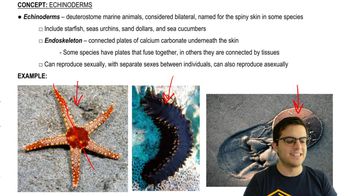
Echinoderms have endoskeletons made up of calcareous ossicles, which are small plates of calcium carbonate. These ossicles are embedded in their skin and can form various structures like spines or a rigid framework.
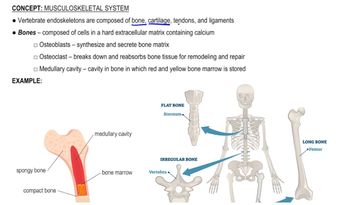
Vertebrates, on the other hand, have a more complex endoskeleton made primarily of bone and cartilage. This includes the spinal column, skull, and other bones that make up the skeletal system.
The presence of an endoskeleton in both groups supports their ability to grow larger and maintain complex body structures, unlike organisms with exoskeletons that must molt to grow.
This structural similarity, however, does not imply close evolutionary relationships, as echinoderms and vertebrates belong to different phyla and have evolved their endoskeletal structures independently.

비슷한 문제에 대한 검증된 영상 답변:

이 영상 해법은 위 문제에 도움이 된다고 튜터들이 추천한 것입니다.
영상 길이:
1m
도움이 되었나요?

주요 개념

질문에 올바르게 답하기 위해 반드시 이해해야 하는 핵심 개념들은 다음과 같습니다.

Echinoderm Endoskeleton

Echinoderms, such as starfish and sea urchins, possess an endoskeleton made of calcareous plates called ossicles. This internal skeleton provides structural support and protection while allowing for flexibility and movement. The unique composition of their endoskeleton is a defining characteristic of this phylum.
추천 영상:

Vertebrate Endoskeleton

Vertebrates, including mammals, birds, reptiles, amphibians, and fish, have an endoskeleton composed primarily of bone and cartilage. This internal framework supports the body, protects vital organs, and facilitates movement through the attachment of muscles. The vertebrate endoskeleton is a key feature that distinguishes this group from other animal phyla.
추천 영상:

Comparative Anatomy

Comparative anatomy is the study of similarities and differences in the anatomy of different species. It helps in understanding evolutionary relationships and functional adaptations. In the context of echinoderms and vertebrates, comparative anatomy reveals that while both groups have endoskeletons, their structures and compositions are significantly different, reflecting their distinct evolutionary paths.
추천 영상:
가이드 코스
08:18
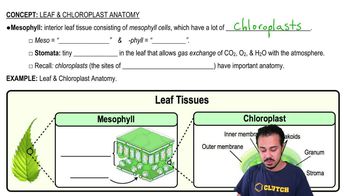
Leaf & Chloroplast Anatomy